


Welcome to the second installment of my series Lessons from a Vintage Golf Magazine.
For those who are new here or missed the first post, the goal of the series is simple: take an old piece of golf literature and see what we can learn from it.
As you might expect, the core principles of the game haven't changed much. There are untapped gold mines of golf knowledge sitting in older writing. All you have to do is go digging.
Let’s get into it.
Sometime in the early 1940s, a writer named Guy B. Farrar published a short piece in Golf Monthly called “A Second Chance.” Farrar wrote this piece as a light wartime diversion — something to amuse club members while the world was on fire. He wasn’t trying to build a framework for course management, but the controlled golf-experiment he had set up certainly turned out to be just that.
If you want to read the original, you can view the images below.
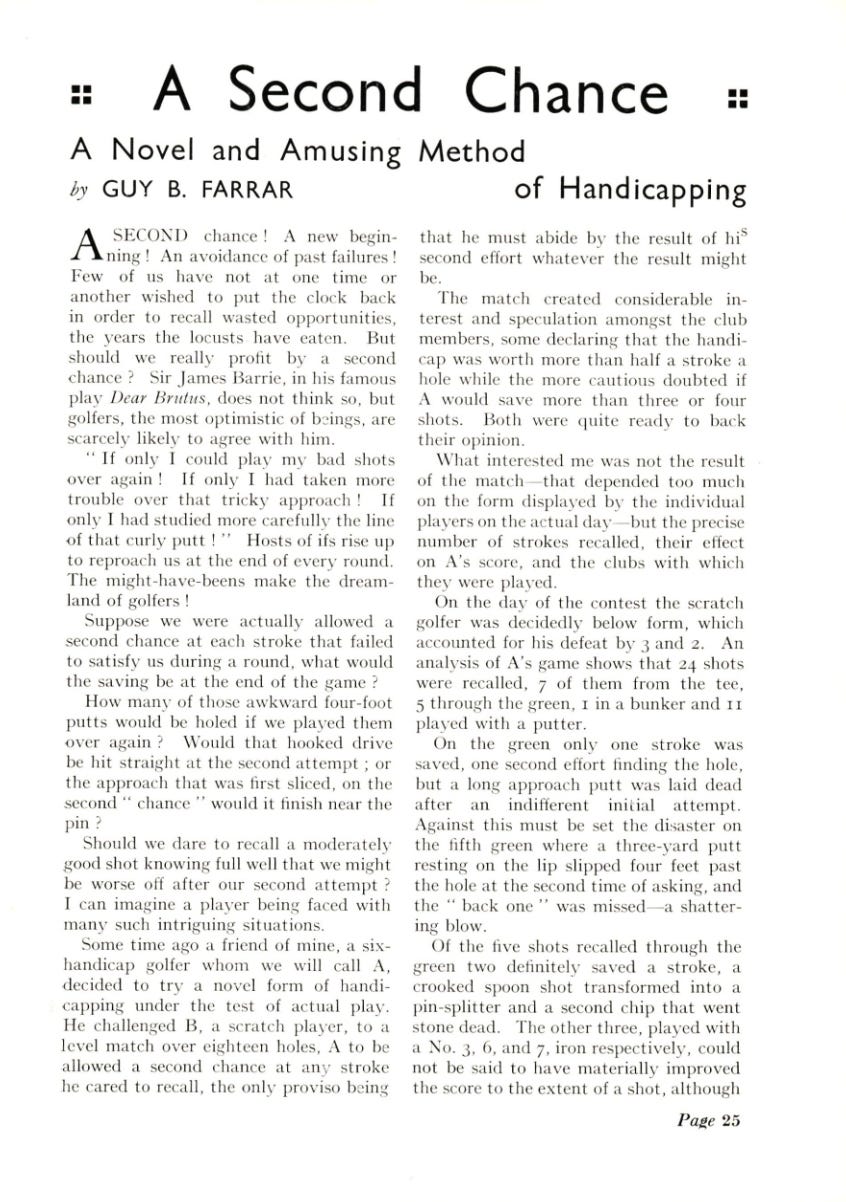
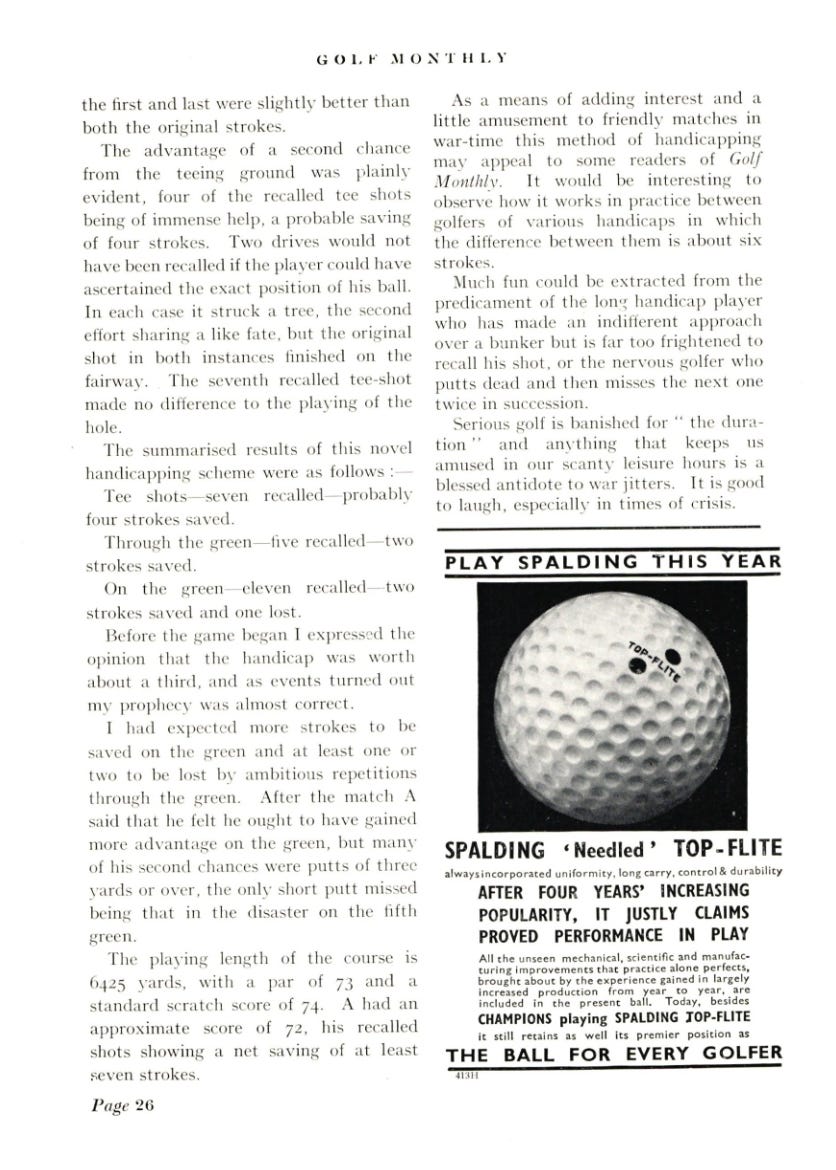
Farrar basically hypothesized “What would happen if we gave an amateur golfer a second chance on EVERY single shot?”
Here was the setup for the experiment:
A 6-handicap golfer, referred to as “Player A”, challenges a scratch player to an 18-hole match. The handicap is unconventional: instead of getting strokes back, Player A is allowed to recall (replay) any shot he chooses during the round. There is one condition though:
He must accept the result of the second attempt, whatever it is.
At the end of the round, Player A recalled a total of 24 shots. The results produced a nice little data set that we are going to dissect and discuss.
The Results of The Experiment
First let’s look at the results of the recalled shots.
Tee shots: 7 recalled. Approximately 4 strokes saved.
Approach shots: 5 recalled. 2 strokes saved.
On the green: 11 recalled. 2 strokes saved, 1 lost. Net: 1 stroke saved.
Interesting.
Player A recalled nearly half his shots from the putting surface, and walked away with a net gain of only one stroke.
Meanwhile, seven recalled tee shots returned four strokes. Five approach shots returned two.
Not entirely what I would have guessed.
Recalling a putt produced almost nothing. Standing over a second attempt with full knowledge of what the first one did turned out to be nearly useless.
This small experiment is a microcosm for the game at large. It’s filled with lessons worth carrying into your practice and your attention to the game.
Let’s break it down further.
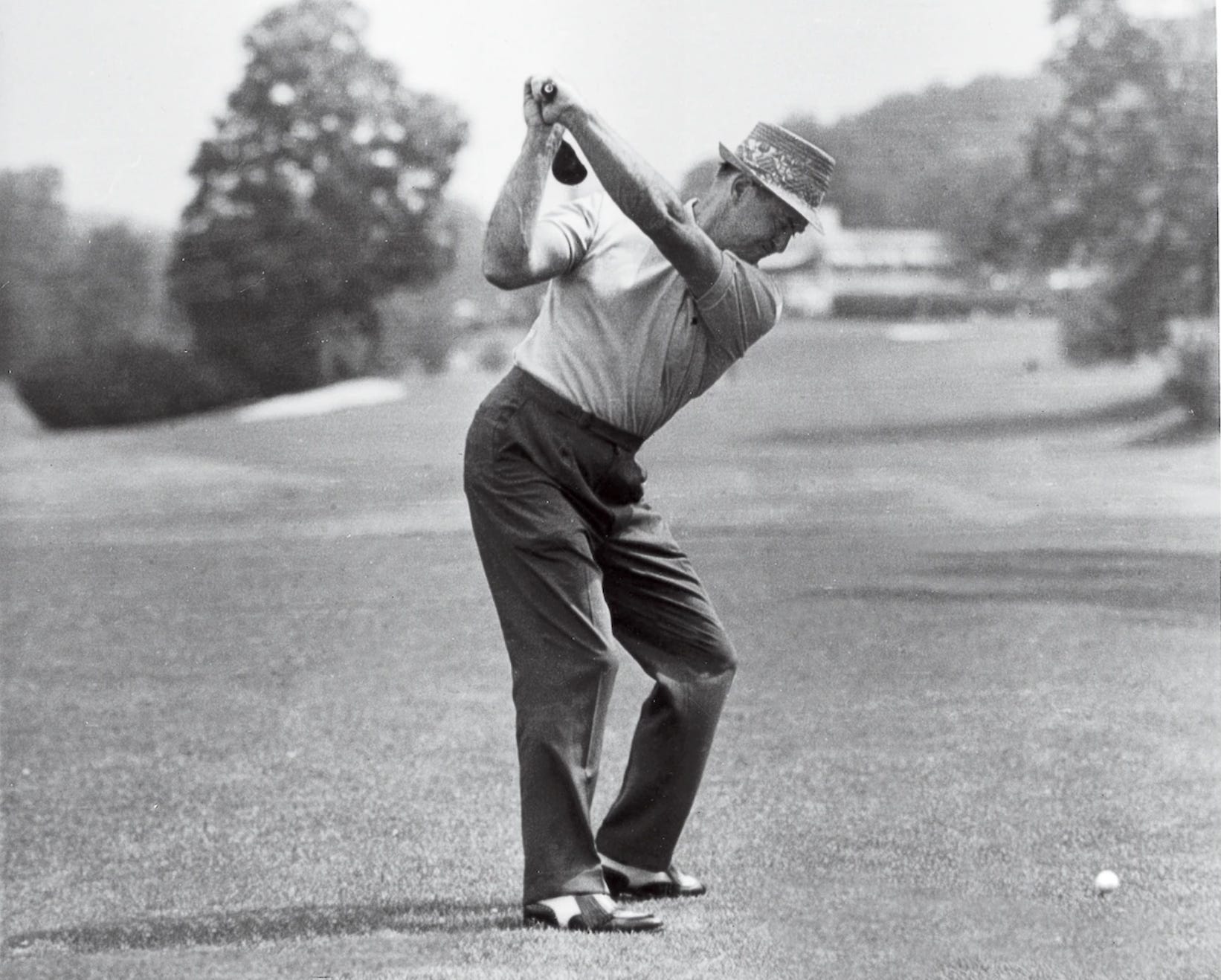
Why The Tee Shot Is So Important
Four strokes saved from seven tee shot recalls. That’s a return rate of more than half a stroke per recall. Nothing else in the round came close.
Why is the tee shot so disproportionately valuable?
We know that golf is a game of compounding consequences. Every shot you hit exists in the context of the shot before it. A blocked drive doesn’t just cost you the drive. It costs you your approach angle, your shot shape options, and maybe even your mental state walking into the shot (I’m trying to get better at this one).
If it’s a really bad tee shot, it could corrupt three or four holes of your thinking. (see Shank)
Something I found kind of hilarious, as Farrar noted, two of the seven recalled drives hit trees — and on both of those second attempts, the ball hit trees again.
It turns out amateurs in the 1940s are no different than amateurs in 2026.
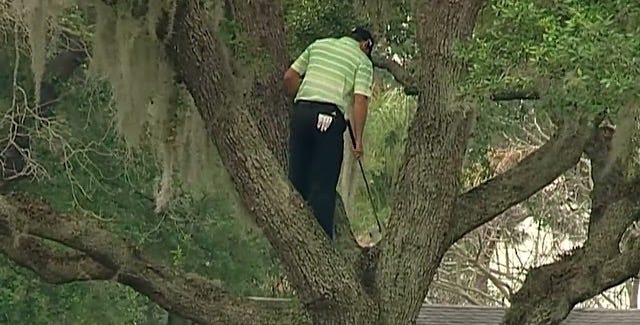
But the other five recalls did finish in the fairway. Position off the tee creates options, and options create scoring opportunities.
Here is the practical implication for you:
It’s possible you would benefit from spending less time on the putting green, and more time on the range hitting driver. And I mean ONLY hitting driver. I’m serious.
You have to be able to get off the tee.
I know that sounds kind of backwards from the traditional advice that old man at the range would give you.

But if you can’t get off the tee, then you can’t get on the green in regulation. And if you can’t get on the green in regulation, then putting won’t save you — learning to get off the tee will.
Modern data still suggests that approach shots have the highest strokes-gained potential, but tee shots were a very close 2nd.
If you didn’t get a chance to read my post on this, you can read it below.

