


Happy Monday everyone! Today I wanted to try something a little different from the usual format. Curious to see how it lands.
The idea is to take one of golf’s most iconic holes and walk through it from a pure course management perspective. Not the history, not the aesthetics—just the decision-making. What are the actual choices being presented, and how should a thoughtful golfer think through them?
And maybe more importantly — what can analyzing a hole like this actually teach us about how we approach our own game.
We’ll start with the 13th at Augusta. It’s probably as good a place as any to begin a conversation like this.
Azalea
Most golf fans have some image in their mind when they think of the 13th hole at Augusta National. It’s name Azalea comes from the entire hole being lined with over 1600 azalea bushes, which typically all have bloomed just in time for the Masters in April.
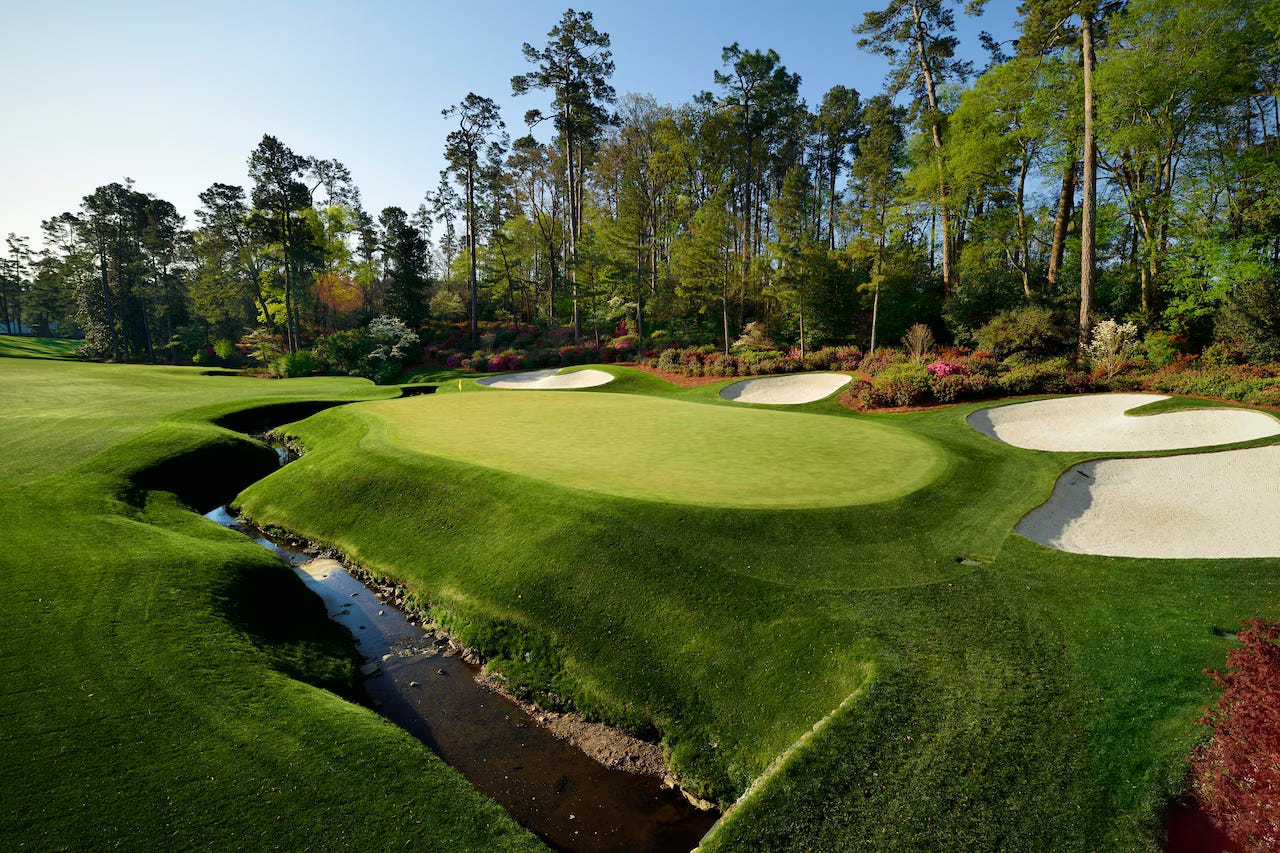
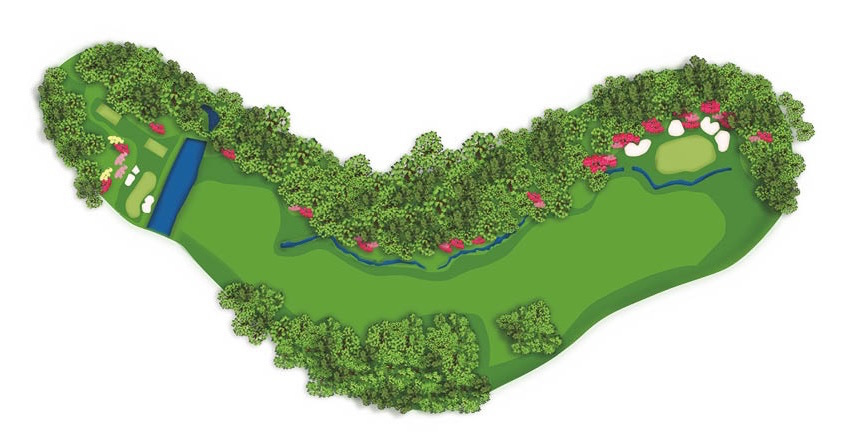
The hole is a dogleg left than runs up to a creek, with a green that looks either inviting or threatening depending on where you’re standing.
It’s easily one of the most beautiful holes in all of golf. But that’s not why we are talking about it.
I think it’s real value goes underappreciated by the average viewer — because the 13th isn’t just picture-perfect golf scenery It’s one of the clearest case studies we have for how thoughtful golf strategy actually works.
That’s what makes it worth spending some time looking at.
More Than a Par-5
On paper, it looks familiar enough. Par 5, reachable in two, water short of the green. There are versions of this hole at courses everywhere.
What makes Augusta’s 13th different is how much it compresses into a small space. Within three shots, a player has to navigate questions of position versus power, aggression versus patience, and risk versus reward near the green. Each decision shapes the next one.
That’s what makes it useful as a study — a perfect microcosm for course management and strategy as a whole.
“It might look like the play is to go for it in two from the (right) rough or pine straw, but it’s easy to find the hazard and make 6. It’s a hole that lures you into wanting to do a little too much, because the green is so large.”
- Jordan Spieth, 2015 champion
The Tee Shot
The drama most fans remember tends to happen at the creek. But I think the more interesting moment comes earlier, on the tee.
The player faces 2 options:
Option 1: Commit to a draw (or fade for a lefty) that hugs the corner and shortens the hole.
Option 2: Play safe out to the right and accept a longer, likely more conservative second shot.
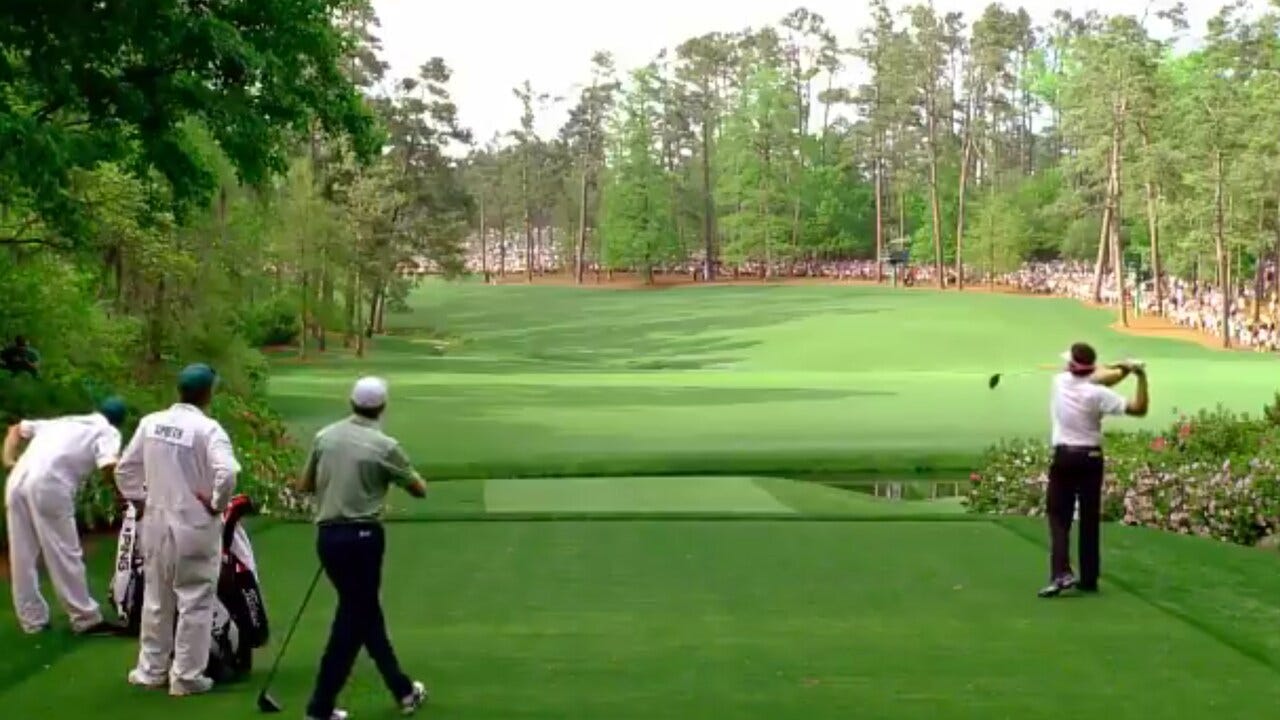
Noting dramatic happens here. There’s no roar from the crowd (since the crowd can’t stand behind them)—and yet this decision probably shapes the entire hole more than any other. Because the tee shot doesn’t just determine distance—it determines which options are available later.
Miss the fairway badly enough, and a third possibility opens up that nobody wants: The pine straw.
The trees lining the right side of the fairway are famous among players for exactly this reason. A ball that that finds the pine straw isn’t necessarily unplayable—the lie can actually be quite clean—but it changes the hole in ways that tend to compound quickly.
The angle to the green shifts. The creek becomes more relevant. And the temptation to still attack the green—now driven more by frustration than by genuine opportunity—often leads to the kind of decision-making that produces big numbers.
The pine straw doesn’t necessarily punish the swing. It punishes the thinking that follows.
A player who can reset emotionally after a poor drive, accept the new situation honestly, and choose the shot that makes double bogey unlikely - that is the player that walks away with a manageable score. The ones who let the bad drive pull them into a bad second decision are the ones the 13th hole remembers…
Smart play tends to start not with executing the current shot, but with thinking about what the next decision will look like. Most recreational golfers swing and then figure it out. Better players generally work the other direction.
For a more detailed guide on playing a hole backward, you can read my post on this exact strategy below:

The Second Shot
Now we’re at the image most people carry when they think of the 13th.
This is where the hole gets very interesting, because it exposes a distinction that I think separates good decision-makers from the rest:
Professionals aren’t typically asking, “Can I pull this off?”
They’re asking, “What usually happens when I try this?”
That shift—from possibility to probability—is subtle, but it changes everything. The first question invites optimism. The second one demands brutal honesty.
The 13th makes that distinction visible in a way few holes do.
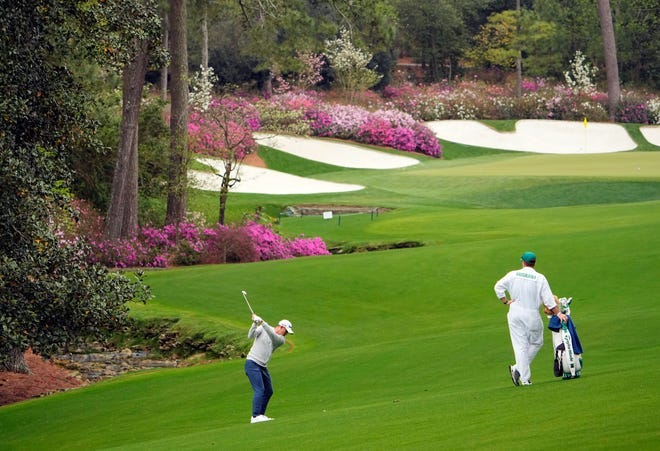
And it’s not as though every pro can’t reach this green in two shots. With a decent drive, you won’t need much more than a long iron or fairway wood to cover the creek.
But length is not the test.
Go long and you’re in the bunkers pitching back down the green towards the creek.
Come up short and you’re dropping 4.
It’s Okay to Lay-Up
For a lot of amateur golfers, laying up on a reachable par-5 feels like a concession. But a well-executed lay-up can change the character of the hole for the better.
It takes a volatile, high-variance situation and turns it into something more manageable. The downside shrinks. The big number becomes much harder to make.
This points to something worth considering for most mid-handicap golfers: the real purpose of a par-5 might not be reaching the green with a chance for eagle lol... It’s allowing yourself the extra stroke to produce the easiest par (or maybe the occasional birdie).
That mental reframe tends to hold up well across a lot of courses, not just Augusta.
So Do The Pros Lay Up or Go For it?
In recent years, the majority of Master’s participants lay up—Somewhere around 60% by most reports. Augusta did increased the length of the hole from 510-yards to 545-yards in 2023. But even still—a 545-yard par 5 is usually an easy 2 shot hole for every guy on Tour.
So if the very best in the world can make a conscious decision to lay back and exercise restraint, I think you can too.
You don’t always need to chase the spectacular. Instead, choose the option that makes a really bad number—a double bogey, a triple—virtually impossible to make.
That kind of restraint compounds quietly.
The Real Hazard
If the conservative play often makes sense, why do so many amateurs still go for it in situations where they probably shouldn’t?
The creek is the obvious hazard. But I think the subtler one is harder to manage: the feeling that laying up is somehow a failure. The thought that you came here to play boldly, or that you’ll regret not trying.
Why This Hole Matters Beyond Augusta
Almost no one reading this will ever play Augusta National, (and if you have please let me know how lol) and yet I think the 13th is still genuinely useful to look at.
The decisions it concentrates show up on almost every course. A reachable par-5 at your local track. A carry over water that’s only sometimes the right play. A tight driving hole where position matters more than distance.
Different scenery, same underlying questions.
Famous holes tend to matter not because of their reputations, but because the patterns they reveal are broadly true.
Here is a simple decision framework you can use:
If you strip the 13th down to its logic, it suggests a fairly straightforward way to approach risky shots:
Before committing, it’s worth asking: what score typically results when I attempt this—not the best case, but the usual one? What happens when it doesn’t come off? What does the conservative play produce? And over time, which choice actually helps my score?
No swing theory involved. Just a bit of honest self-assessment before pulling the club.
It doesn’t just test your ball-striking. It tests your judgment.
And judgment, more than most golfers probably realize, is where scores actually come from.
Final Takeaway
Hopefully you guys enjoyed this week’s post, because there are plenty of other holes worth analyzing. Course designers put a ton of thought into how a hole creates pressure and the ways to challenge players mentally.
The more you study famous holes this way, the more you start noticing the same patterns at your home courses. The same risk-reward trade-offs.
And at some point, it starts to sink in that better scoring is often less about the swing itself than about the decision you made a few seconds before you took it.
Have a great week!
Tommy
PDF Guides: Are available by clicking here for paid subs
Social Media: Make sure to follow me on X here.