


I’m not sure about you guys, but I HATE par 3s.
On the surface they are fairly simple. You don’t need to hit driver. You don’t need to hit a fairway. You just need to commit to one swing with a mid-iron (usually) and put it on the green. How hard can that be?
Yet somehow, par 3s wreck scorecards more than any other hole.
What do the numbers say?
According to Shot Scope’s 2024–2025 database of over 350 million shots, a 15-handicap averages 3.9 on par 3s. Arccos data puts golfers between 13–20 handicap at 4.01.
The typical mid-handicapper is dropping close to a full stroke on every single par 3 they play.
So with four par 3s per round, assuming you do nothing different, you’re handing away roughly four strokes before you even check into the pro shop.
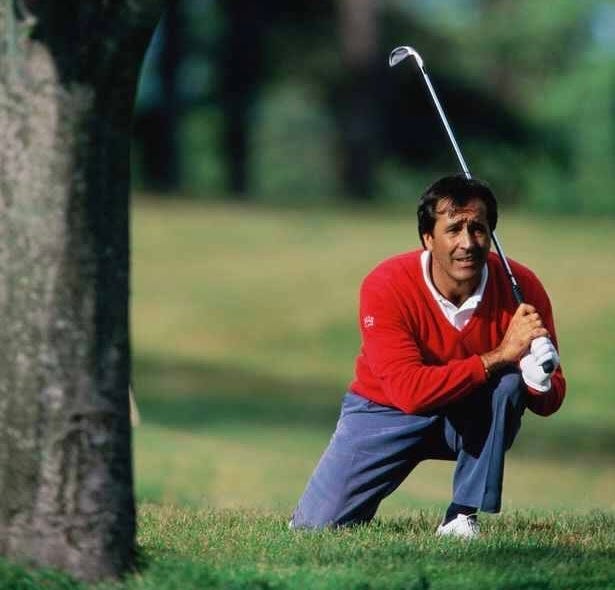
Par 3s can be punishing holes if not played correctly. How you choose to approach them is extremely important. They are precision tests, and they tend to expose weaknesses pretty efficiently.
I am hoping that by reading this post, you’ll start to give par 3s the respect and attention they deserve — and maybe limit the damage they can cause to your scorecard in the future.
Let’s get into it.
Par 3s Are Actually Hard (It’s Not Just You)
Let’s start with greens in regulation on par 3s. For a 15-handicap, Shot Scope reports:
100–150 yards: 37% GIR
150–200 yards: 20% GIR
200+ yards: 7% GIR
If you’re a 15-handicap playing a 200+ yard par 3 (which you probably should move up a tee box at that point) you can expect to miss the green 93% of the time...
But it’s not just about missing — it’s also about where you miss.
The average proximity to the hole by distance for average handicaps:
100–150 yards: 51 feet
150–200 yards: 79 feet
200+ yards: 120 feet
So if you’re a 10-handicap hitting from 150–200 yards, the average proximity to the hole will be about 70 feet. That’s not what I’d call a birdie look. It’s a long lag putt. And from that distance, three-putts start creeping into the equation.
The unfortunate truth is that once a par 3 stretches past a certain yardage, it starts playing like a par 4 for a lot of golfers.
Your Short Game Isn’t Helping
Ok, so let’s say you miss the green on your tee shot, and you now have to get up and down to save your par.
I wish I could tell you it gets easier…
For mid handicappers (10-20 handicap)
0–25 yards: 43% up-and-down rate
25–50 yards: 16% up-and-down rate
Another way of reading that: From 25–50 yards, most mid handicaps have an 84% chance of not getting up and down.
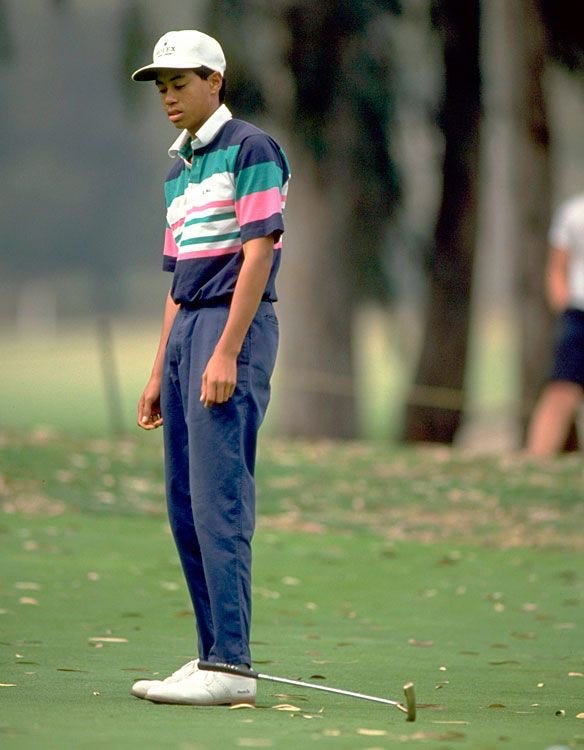
So far, here is our typical sequence on a par 3:
Miss the green, chip to 20 feet, miss the putt, make bogey.
It’s just what usually happens. I didn’t make the rules.
The margin for error on par 3s is unfortunately very small, and the recovery rate is low. It’s a brutal combination that adds up quietly over a round.
So What Can You Actually Do About It?
Here’s the thing. None of this requires a new swing. That’s not what we’re about here— as most of our subs already know. It comes down to making better decisions before you even pull a club. And some of these are genuinely simple once you’re aware of them.
