


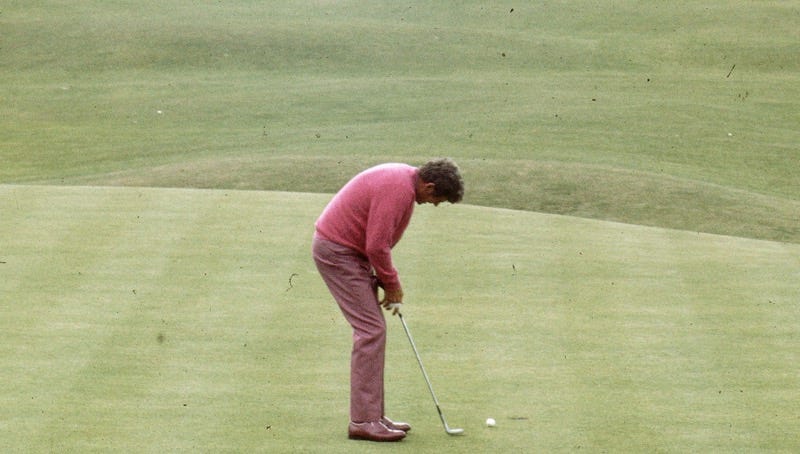
Walk by any public golf course and you’ll see it. A player rolls a putt to within a few feet, and someone in the group says, “That’s good,” and the ball is picked up before the player ever attempts to read the putt. No debate, no delay — just a small courtesy that keeps the round moving and the atmosphere light.
In casual golf, gimmes feel harmless. They’re rooted in golf etiquette and pace of play. And I get it, nobody wants to be the guy who makes everyone wait while he grinds over a two-footer.
But here’s the problem:
That small social courtesy is quietly doing real damage to your putting.
Those “short, easy” putts you keep giving yourself are the thin margin separating you from the putter you want to be. By skipping them, you’ve systematically removed the only pressure cooker that builds the skill you think you already have.
Here’s a compilation of pros missing gimmes — If there even is such a thing as a “gimme”.
What Actually Is a Gimme?
The most common definition you’ll hear is: inside the leather. Grip the putter, flip it upside down, place the grip end at the hole. If the ball is closer than the grip length, it’s good. That lands you somewhere around 18 inches to two feet depending on the putter.

That’s the standard. But in practice (as I’m sure you’ve all witnessed) gimmes can be anything people want them to be…
The “gimmes” I’ve seen people give themselves have no limit. Four-footers with a sharp break, downhill left-to-righters, three-foot birdie attempts. The list goes on.
And look, I get it. Nobody wants to be the serious hard-ass making everyone grind over every tap-in. It kills the vibe and makes a casual round feel way too stiff.
Your playing partners can do whatever they want. All I’m saying is that if your goal is to actually improve and become a better putter, you need to start politely declining the next time someone tells you “that’s good.”
Because you aren’t just taking a gimme. You’re completely bypassing the fundamental building blocks required to actually become a great putter.
Let’s break down why.
