


Golf has no age. It’s one of the things I love most about the sport.
Any given week on tour, a 16-year-old and a 60-year-old can tee it up against the best players on the planet and have a legitimate shot at competing. Try saying that about the NFL lol.
So I was curious: who were the youngest and oldest players to ever make the cut at Augusta? And more importantly — what does the answer tell us about the nature of the game itself.
Before we continue:
If you enjoy the content and want access to all of the premium posts, I am running a little promo to receive 30% off an annual subscription HERE.
Who Were The Golfers?
In 2013, a 14-year-old (yes 14!) from China named Guan Tianlang showed up to Augusta National and made the cut. He drove it about 250 yards. and only hit 44% of greens in regulation.
Additionally, he received the first slow play penalty in Masters history on the 17th hole of Round 2, and still made the cut…
Just to reiterate. A child, on the cut line, receiving a one-stroke penalty in the final round at Augusta National, still made it through to the weekend. Fourteen years old. Unbelievable.
Now onto the other extreme.
In 2023, Fred Couples made the cut at Augusta at 63 years old. He drove it 280 yards in a field averaging 305. He was older than most of the caddies.
He finished T50 and walked off Amen Corner extending a streak of 23 consecutive cuts made at Augusta, tying Gary Player’s all-time record. Thirty-one career cuts at Augusta National.
I think we will continue to see Freddie play the Masters for a long time.
Fifty years separating these two. Same test. Same result.
How can you not love this game?
“Golf Isn’t a Real Sport”
You often hear golf getting dismissed for not being a “real” sport. The argument is that it lacks contact, explosiveness, sustained cardio output etc... Let’s say that I agree (I don’t). Golf certainly isn’t a lesser sport because it lacks those things. It’s just a different sport because of what it demands instead.
Sure the ball doesn’t move. There’s no reactive opponent. No one is closing on you at full speed.
The only thing standing between you and a good score is the decision you make before you swing, and the ability to execute it.
Every other major sport filters out older players through physical attrition. The NBA doesn’t care that a 38-year-old has superior court vision if he can’t defend on the perimeter. Good luck defending Anthony Edwards old man lol.
The NFL doesn’t care about experience if getting tackled will result in you being placed in a wheelchair for life.
Tennis is unforgiving to the legs regardless of the mind.
Golf is the only sport where the mind can outrun the decline of the body. Or it can show up before the body even develops (see Guan Tianlang).
The Test of Augusta
Alister MacKenzie didn’t design Augusta National to necessarily punish bad swings. He designed it to punish bad decisions.
The rough is minimal. A missed fairway doesn’t completely bury you. What buries you is the wrong angle into a green, the wrong tier, the wrong side of the hole.
Augusta separates players not at the point of contact, but at the point of thought — thirty seconds before the swing.
Miss the wrong section of the green and you’re looking at a two-putt from hell, maybe worse.
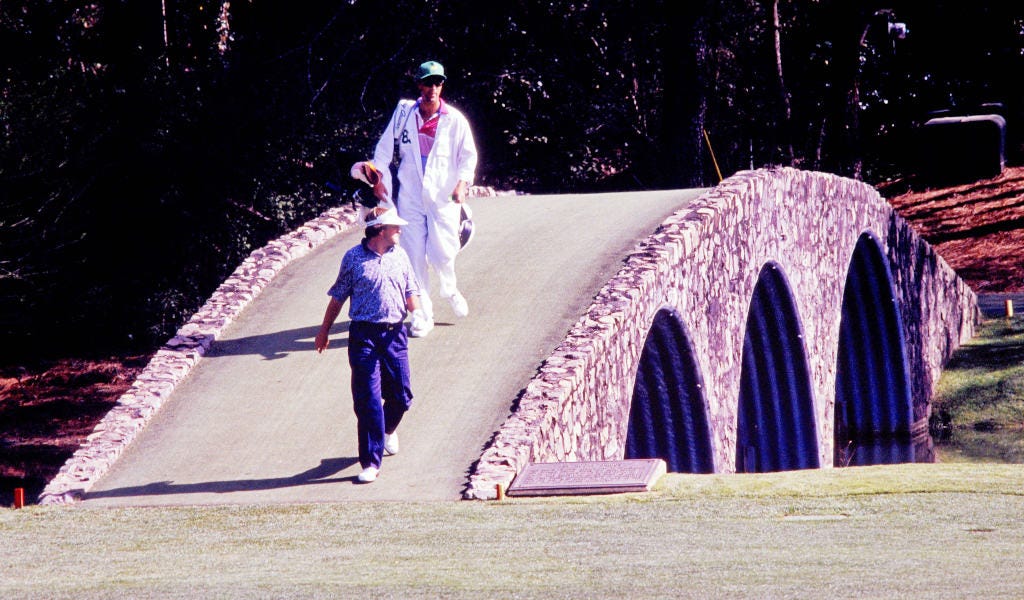
Amen Corner demands three consecutive correct decisions in a row. One of the best shows in sports.
Maybe this is what both Guan and Couples understood — maybe for different reasons. Guan, at 14, played targets that looked cowardly. Laid up on the par 5s. Aimed for the middle of greens instead of flags. Played for the 30-foot birdie look, not the 10-foot one that required a risky line. He had zero three-putts for the entire tournament. Zero. His driving accuracy was abysmal. His GIR was below 50%. He made the cut anyway.
Couples, at 63, hit 82% of fairways. Hit the middle of greens. Used the slopes. Never chased.
“I can’t compete with Rahm or Hovland,” he said, “but I can compete with myself.” He understood his game, played within it, and outlasted dozens of players thirty years younger who didn’t.
The Only Skill That Doesn’t Age
Distance declines. Flexibility declines. We know this. But the ability to recognize what shot to hit, where to miss, and when to lay up — that sharpens.
Maybe being 14-years old was an advantage in some strange sense? He had no scar tissue or terrible memory of a particular hole. He saw a shot and played it without the weight of consequence.
But being 63-years old is much different. He’s seen every lie, every wind, every scenario. He doesn’t need to weight his options as much (similar to the 14-year old). He executes what he knows without too much internal deliberation. This is a major advantage.
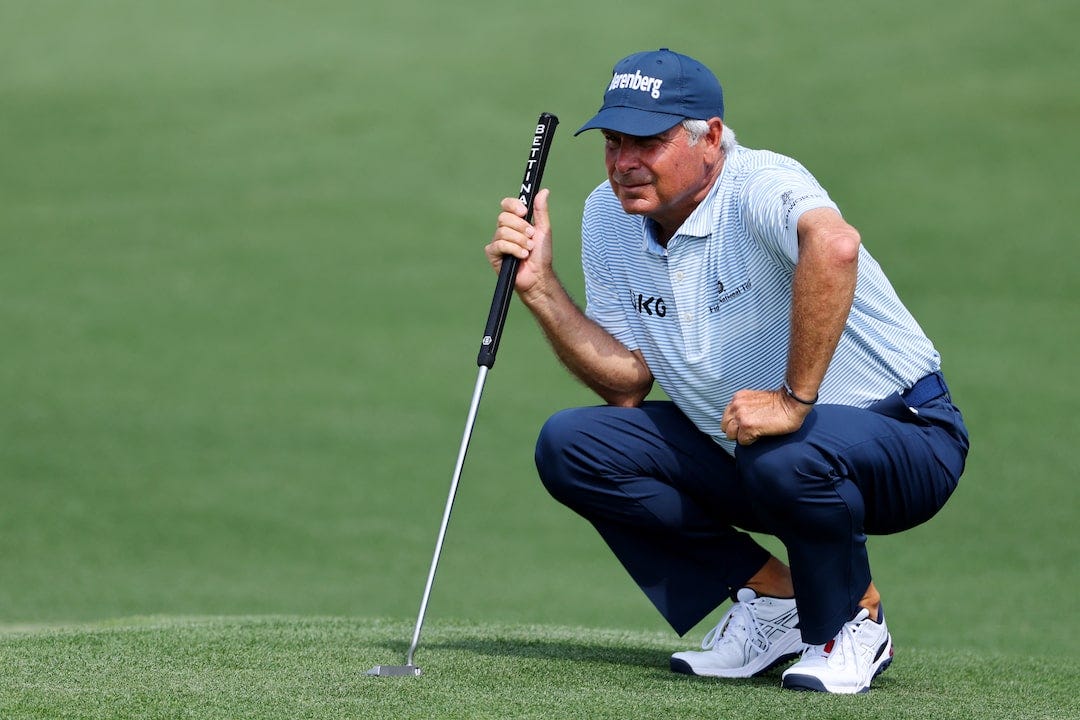
Ignorance and wisdom can be two different paths to the same result in this game. You stay within yourself, do what you know, and the results may follow.
Who Was The Oldest Winner?
Sure making the cut is impressive. But what about actually winning?
We would have to go back to 1986, where Jack Nicklaus won the Masters at 46 years old.
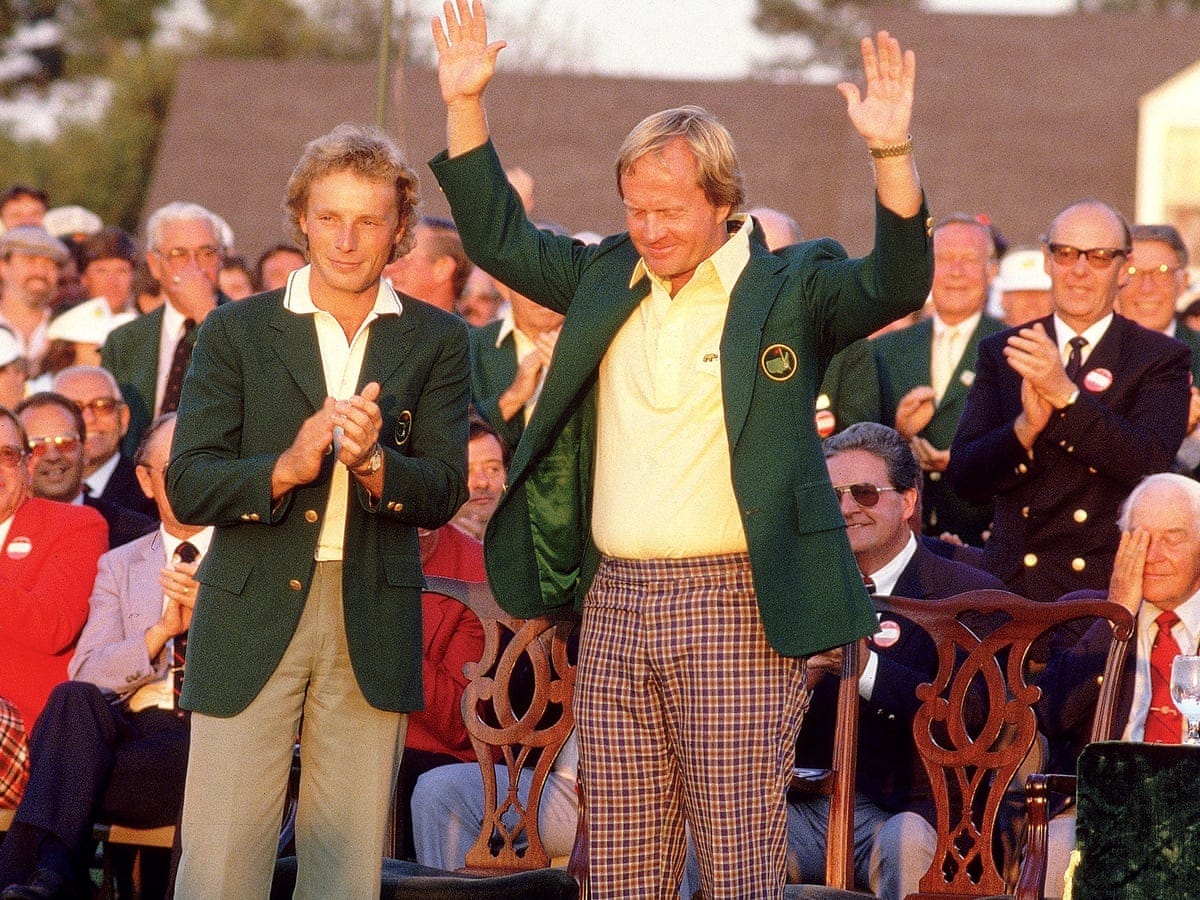
He shot 65 on Sunday, made six birdies on the back nine, and walked off 18 as the oldest major champion in history. The field that week included players half his age with twice his distance.
It didn’t matter. He had played Augusta more times than most of them had played competitive golf.
The Final Takeaway
There is no doubt the physical component of golf is real. You need to be able to execute the shot you’ve chosen. But execution is always downstream of decision. And decisions don’t require a 40-inch vertical or a 5-second 40-yard dash.
Golf isn’t easy. It’s extremely demanding. You know this lol…
But a large part of that demand is mental — which is what allows this rare convergence of young and old at the highest levels of the game.
A 14-year-old and a 63-year-old walked the same 18 holes, read the same greens, made the same good decisions.
The scorecard just records the number and moves on.
Until next time,
Tommy