


If you’re like most amateurs, you probably reach for the 58 or 60 degree automatically, because that’s what “good chipping” looks like in your head. High, soft, and spinny. The kind of shot that gets compliments on the practice green. And somewhere along the way, that image became the default—not just for difficult situations, but for basically everything inside 30 yards.
Luckily for us, there are groups of golf nerds who track all of the millions of shots hit throughout the year, and then produce data to help us understand the best clubs to hit. And the shot-tracking data for chipping tells a different story than you might have expected.
Platforms like Arccos and Shot Scope have logged hundreds of millions of real shots from real amateurs, and the pattern that keeps emerging is remarkably consistent:
Most golfers score better with less loft, lower shots, and earlier roll.
Not in every situation. But in far more situations than most of us would guess.
Instead of you needing to go out and search for all data on your own, I did the work for you, and put together a little guide that walks you through what the data actually says—by club, by shot type, and by handicap level—so that next time you’re standing over a chip, you have the very best chance at hitting a good shot.
We aren’t concerned with what looks the coolest, or gets the most applause from buddies. We want the shot that gives us the highest percentage chance to end up close to the hole.
That’s the game—I think.
The Numbers
Let’s start with a single number that cuts through a lot of short-game folklore.
Arccos looked at a genuinely common scenario: roughly 15 yards from the hole, sitting in the rough, about 12 yards of green to work with.
For a 15-handicap golfer, the average strokes to hole out with a pitching wedge was 2.68. With a 60-degree wedge, it was 2.85. That just means if you decide to use a pitching wedge and then putt, its likely to take you less strokes than a 60-degree and putt. It does not mean hole out with the wedge.
So that’s a 0.17-stroke difference from club selection alone. No swing changes. No practice. Just choosing a different club for the same shot.
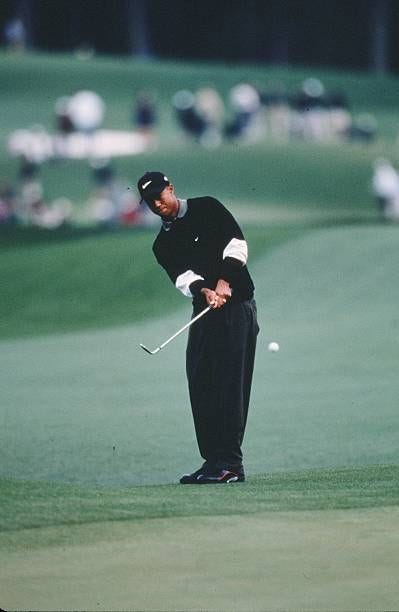
It might sound small, but consider how often that situation shows up. Most mid-handicaps miss six to ten greens per round. If you’re leaking even a fraction of that advantage on several chips per round, you’re probably giving away a full stroke or more without any awareness that it’s happening. Over a full season, that could be the difference between a 13 handicap and an 11.
I know it doesn’t sound like much, but dropping one or even TWO full strokes off your index solely from club selection is insane.
Why the Lob Wedge Keeps Underperforming
The performance gap isn’t random. There’s a mechanical reason why it keeps showing up, and it has to do with how amateur usually swing a golf club.
A lower-lofted chip — 9-iron, pitching wedge — requires a shorter swing arc to produce the same carry distance. Shorter arc means less timing variance, fewer moving parts, and a genuinely larger window for imperfect contact.
The ball launches around 15 to 20 degrees with modest spin. It lands and starts rolling predictably. You can be slightly heavy and still get it somewhere reasonable. Slightly thin and you’re probably still on the putting surface.
A lob wedge launches at closer to 40 to 50 degrees with much higher spin, but only when contact is clean—and contact quality is exactly where the mistakes start to show up.
A slightly heavy strike becomes a chunk that goes three feet. A slightly thin one becomes a skull that shoots across the green into whatever trouble is waiting on the other side.
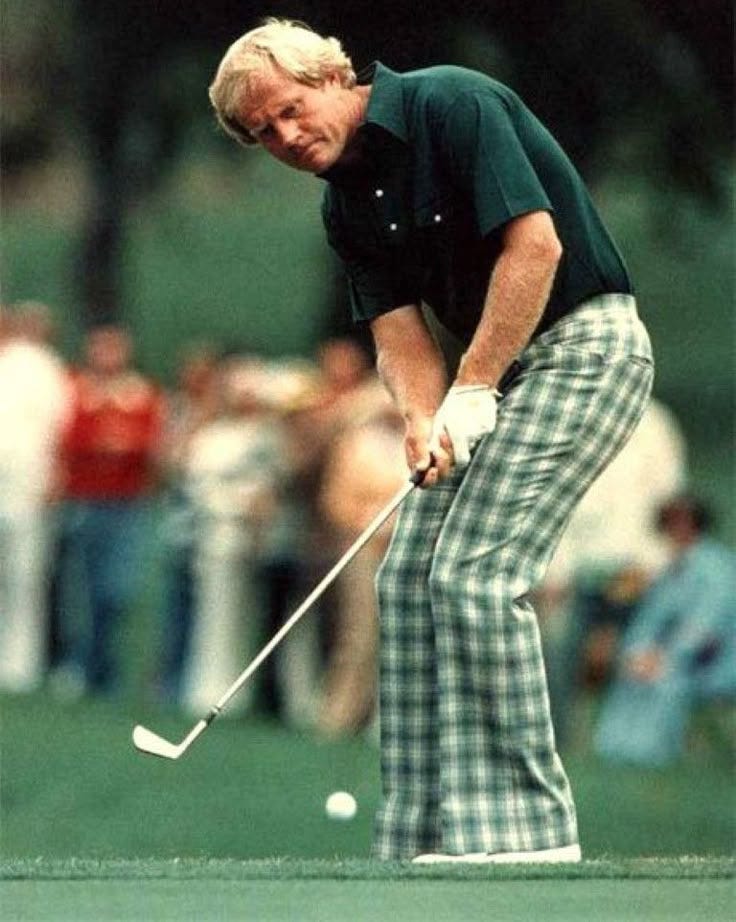
Using a lower lofted club for your chip shots shortens the required swing arc, narrows the timing window, and gives you a much more forgiving impact zone. High loft does the opposite. It demands a longer, faster motion with a more precise bottom point — which is a genuinely difficult task to repeat under pressure for anyone who isn’t practicing several hours a week.
Because of obvious reasons, pros have much less variance in their swings than you and me. They can hit the exact same chip 10 times in a row. So it’s not that pros can use high loft with control and amateurs can’t. It’s not that the lob wedge is advanced. It’s that it magnifies inconsistency, and inconsistency is essentially the definition of amateur golf.
The error rate data reflects all of this. Bump-and-run style shots with lower lofted clubs produce error rates below 10 percent for most amateurs. High-loft flops sit somewhere in the 30 to 40 percent error range—roughly two to three times higher.
That gap alone should probably reshape how most golfers think about their default club selection around the green.
The Club-by-Club Breakdown
Here’s what the data tends to show when you group chipping clubs by loft. These numbers reflect performance averages across mid-handicap amateurs drawn from Arccos, Shot Scope, and MyGolfSpy-style analytics:
