


Happy Sunday, golfers.
Before we get into today’s content, I just wanted to let you know that I’ve been working hard behind the scenes to secure some discounts for you all. So today, I’m thrilled to announce that the good people over at Shot Scope are giving Scoring Letter readers 15% off!
Shot Scope is a leader in golf technology, specializing in top-tier rangefinders, launch monitors, and GPS tracking watches. Just use the code TOURSWINGS at checkout to receive your 15% off.
Okay, let’s get into it.

Today’s quote:
“If profanity had an influence on the flight of the ball, the game of golf would be played far better than it is.”
— Horace G. Hutchinson
Understand Your Shot Dispersion
Let’s play a fun little course-management game:
What shot shape would you hit into this green?
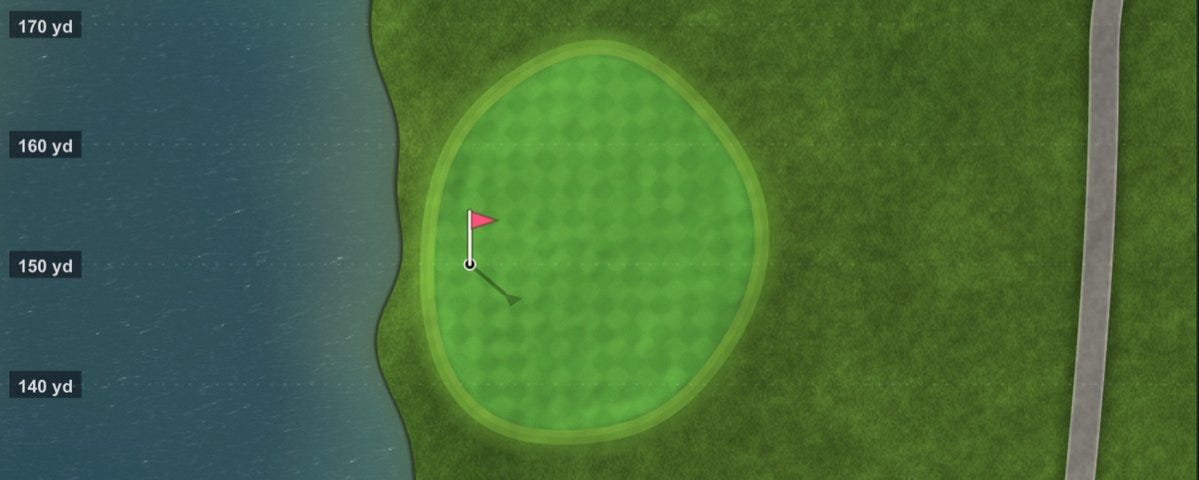
Conventional golf wisdom would tell you this hole location calls for a draw and nothing else, but according to Adam Young, it’s not that straightforward.
If you’re on X, do yourself a favor and go follow Adam Young, or check out his website here. He produces these amazing visuals with expected scores based on amateur shot dispersions.
In a recent simulation, he overlaid a draw dispersion and a fade dispersion onto a hole featuring a tucked left pin with water down the left side.
Here is the draw dispersion:
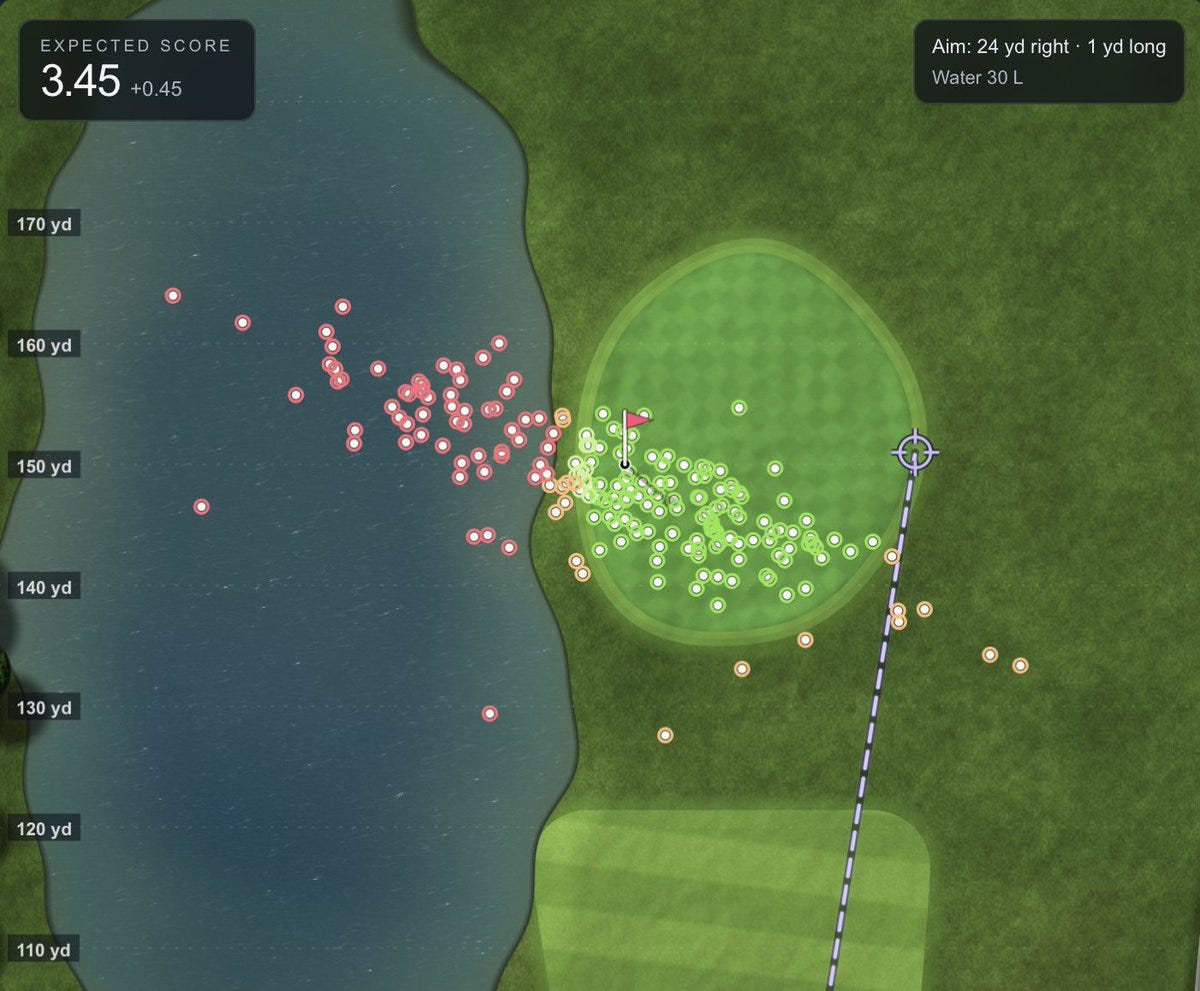
As you can see, even if you can hit a shot shape that seemingly "fits the hole," your expected score will tank if your dispersion pattern includes wide misses to the target side.
(FYI the dotted line is the start line if this wasn’t obvious)
Now let’s look at someone who plays a natural fade:
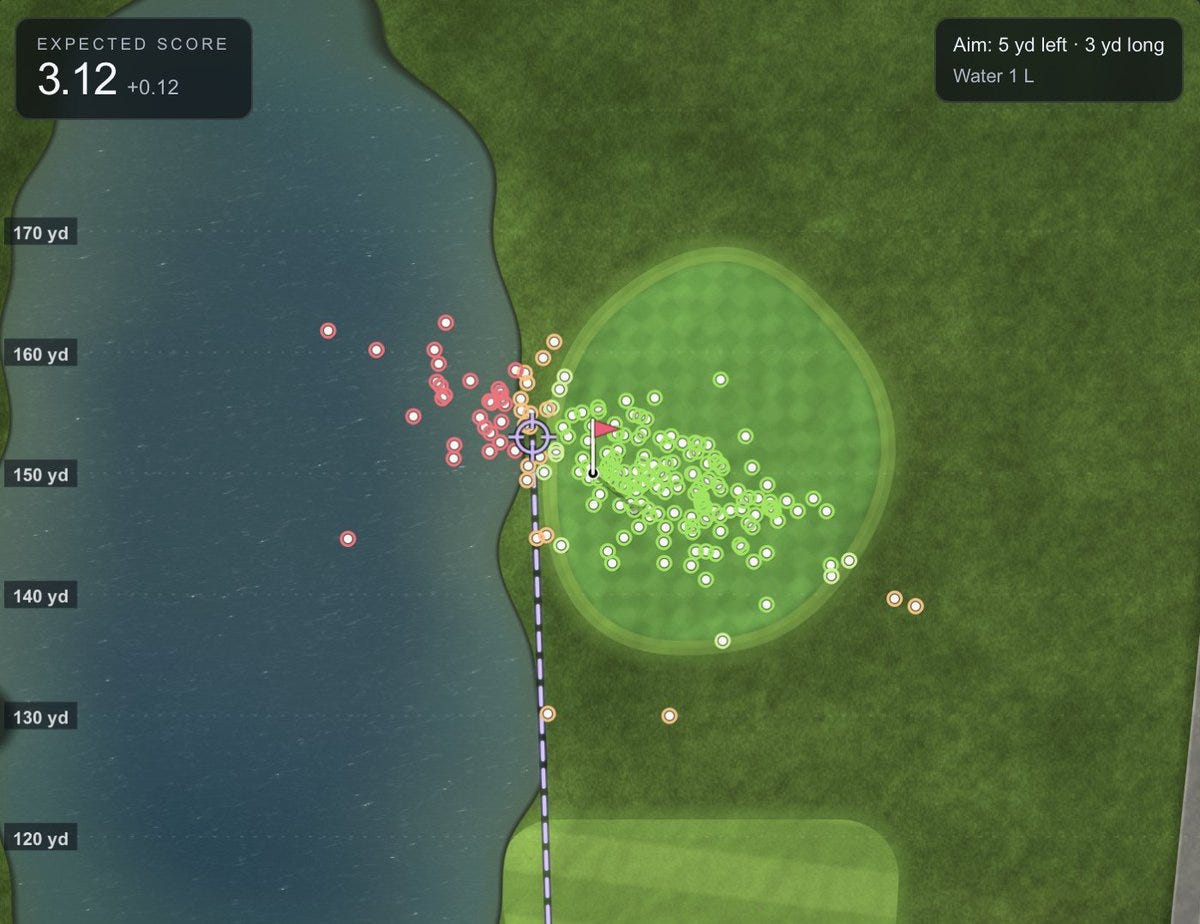
Even though a few shots might occasionally pull left, the average expected score is still lower because the dispersion pattern with a fade is typically much tighter.
He argues that “in almost every scenario, the TIGHTEST dispersion pattern, aimed correctly, will score the lowest.”
That doesn't mean hitting a fade is always the superior choice. It just means that tightening your overall dispersion will serve you better than trying to shape shots into greens.
It is also an important reminder that if you’re targeting an area near trouble, you must account for the absolute outer limits of your dispersion pattern.
Practice Swings
Do practice swings help? Do they hurt? Do they do anything at all? It’s a question I’ve seen online for a while now, and I triggered a friendly debate online with a post I put out last week.
I created this chart (mostly out of satire) that shows the better you are, the less practice swings you take.


Also, side note: I caught some flak for my chart-making abilities. The chart would have made more sense visually if I had the direction of the correlation going down instead of up. But I never claimed to have a degree in chart-making. So there.
Anyway, it sparked an interesting conversation as prominent online golf coach Ryan Mouque stepped in to explain why he believes taking one to two practice swings is beneficial.
He explains that the importance of the practice swing is for feels, and that if you skip them, you’re doing your golf swing a disservice. You can watch his full video below:

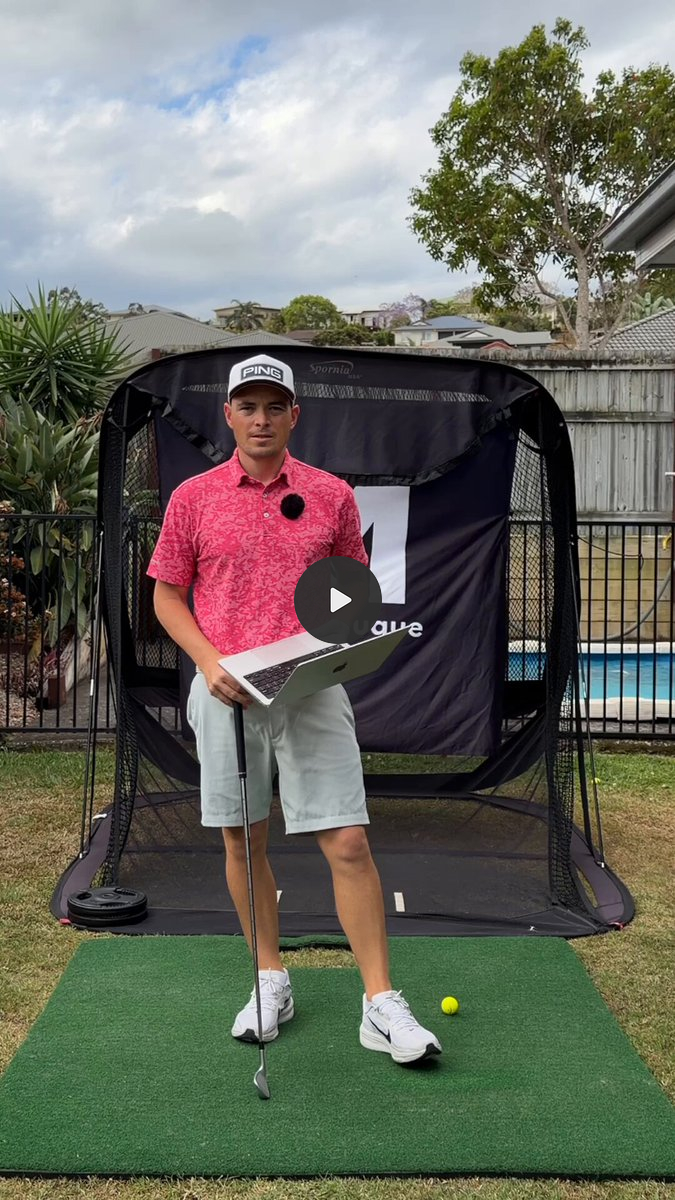
Now personally, I use one exaggerated feel for my practice swing, but that’s it. I definitely think there’s a Goldilocks zone here: too many practice swings and they become useless, while zero—or mindless ones—can hurt your game.
There’s good data out there showing how the time you spend behind and over the ball impacts your swing. Ultimately, the right answer comes down to personal preference—but I’d love to know where you guys stand.
What’s the ideal practice swing, and how many do you usually take?
Indecisive Shots
Here’s a situation I’m sure you can all relate to:
You walk up to your ball, shoot the yardage, and realize you’re caught between clubs. You decide to club up, hit a half-hearted shot because you're terrified of going long, and completely mishit it because you didn't commit.
Trust me, I’ve been there, and it’s infuriating. But it’s also extremely common—and thankfully, there’s an easy fix.
Club down, hit it hard, and accept coming up short.
Online golf coach and caddie Drake Smith breaks down this common mistake perfectly, explaining why he always tells his players to club down and hit it hard.

Golf is a game of choosing the correct miss. Choosing the high-probability shot—like aiming for the front edge of the green with a hard, committed swing—instead of making an uncomfortable, indecisive swing that has a higher likelihood of producing an errant shot, is what the game is all about.
As Drake Smith says, accept that you don’t have the perfect number, and move on.
That’s it for today. Thanks for reading.
Hope you all have a great week and get out and play!
—Tommy
Tommy’s Recommendations
Start leveraging the power of AI track to your shots and analyze your tendencies. Shot Scope is giving my readers 15% off! Just use the code TOURSWINGS at checkout.
You know how valuable distance is. If you want to add clubhead speed with a structured, proven program, check out The Stack. Use code TOMMY for 10% off.
If you don’t want to spend an arm and a leg on golf clubs, go check out Next Round Golf. They offer an incredible selection of high-quality, used golf clubs.
Resources
Grab a copy of my ebook The Game Within the Game (free for paying subscribers here).
Follow me on X here.
Follow me on Instagram here.
Email me at tourswingstommy@gmail.com
Claim 25% off your first year’s subscription here.
