

Happy Sunday, everyone. Hope all of you living in cold-weather states are getting your last licks in. I’m fortunate to live in a year-round golf climate (Southern California), but I’ve been hearing rumblings of golfers prepping for the off-season now that we’ve entered October.
Anyway, let’s get into it.
Today’s quote:
“Golf is a game that is played on a five-inch course—the distance between your ears.”
— Bobby Jones
Strategies For Breaking 80
Golf Digest put out an article last week on 13 data-backed strategies to break 80 (you can check it out here). A lot of them are pretty obvious — like “don’t chase birdies” or “try to avoid three-putts.” But two of their points I thought were genuinely helpful and went beyond the surface-level break 80 advice you normally hear.
The two strategies are listed separately in their article, but I think they actually go hand in hand. Let’s break them down first, and then I’ll explain why I think they’re related.

1. Beware the 150–200 zone
According to their data, a 10-handicap playing an approach shot from 200-plus yards out has a 20 percent chance of making double bogey. Remember: double bogeys are our mortal enemies! Now look at their next tip.
2. Play for GIR+1
GIR+1 is a stat created by Mark Broadie. It’s when you either hit the Green in Regulation OR hit the Green in Regulation using one extra shot. It’s basically if you’re greenside and have a chip for birdie. They basically make the case that for a lot of golfers trying to break 80, you should sometimes treat this GIR+1 as a win.
How I Think They’re Related
So let’s say you’re faced with the nightmare long approach shot from close to 200 yards. I think it’s important for you to remember that double is now creeping into play — but only if you try to play outside of yourself. My recommendation is to play for a GIR+1.
Select a club you trust to get you near the green. Reaching the putting surface isn’t required. You just need a decent chance to scramble for par. Even if you miss the par save, a bogey doesn’t ruin your card. But making a double because you went OB trying to hammer a club from a distance you have no control over, just to try to reach in regulation — that’s what we’re trying to avoid.
Featured Book
I recently released my first book, The Game Within the Game.
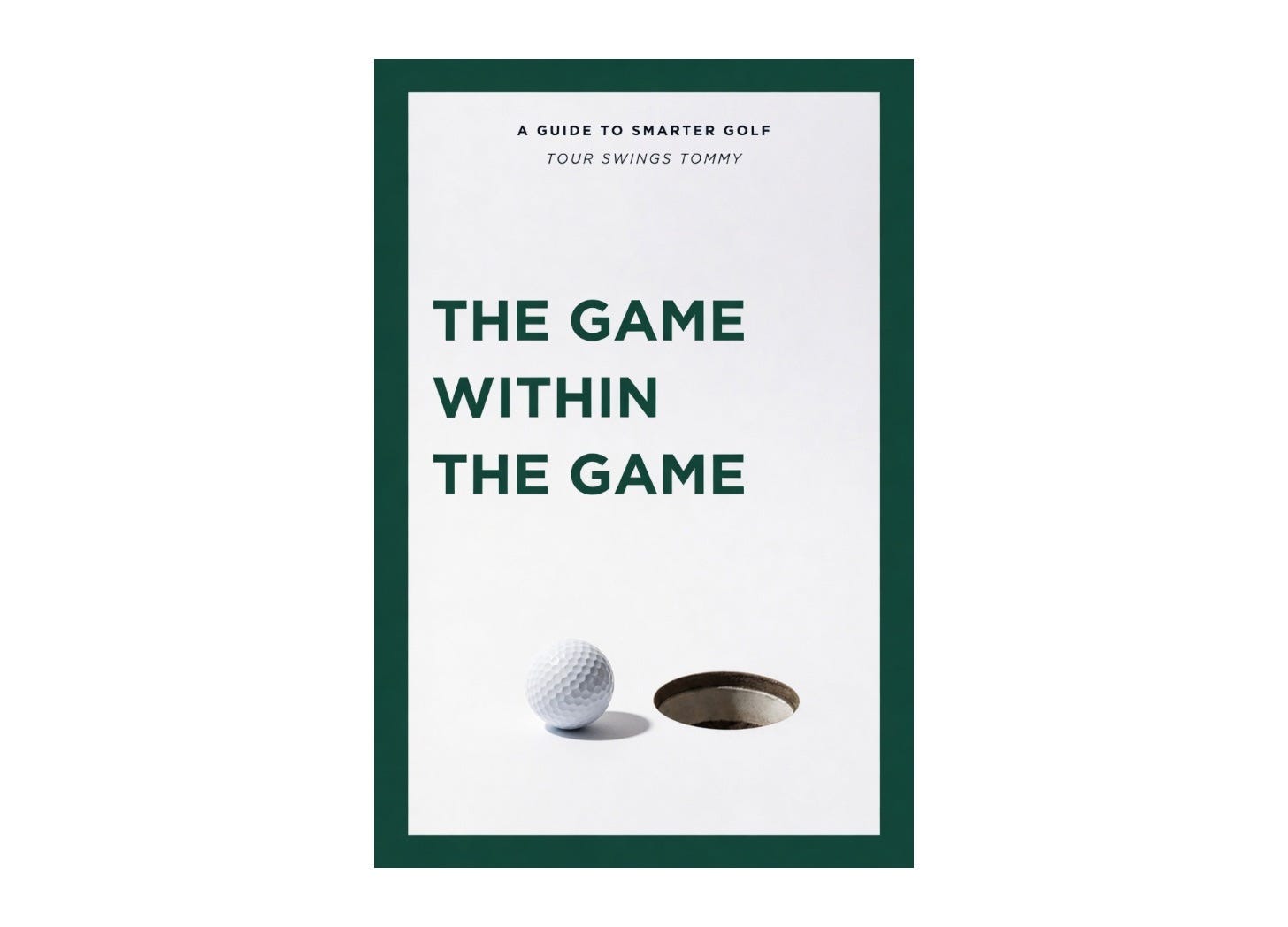
You can get it on Amazon HERE.
If you’re a premium subscriber, you can get it for free HERE.
Limit Your Time Over The Ball
I recently posted this clip to my X account of Phil Mickelson’s famous shot on the 13th at Augusta. What I’d never noticed before was how quickly he hit the shot after addressing the ball.
It took him just 5 seconds from the time he addressed the ball to make contact with it. Check it out:
It’s a good reminder for all of us that once you’ve committed to a shot, standing over the ball and letting your mind wander does you no good.
I’ll leave you with a couple of quotes:
"The longer you stay over a shot, the more likely you are to let doubt sneak in. Pick a target, align, and swing.” — Dr. Bob Rotella
"Once you are over the ball, any more thinking is purely destructive. Go ahead and hit it." — Jack Nicklaus
