

Welcome, golfers.
I want to start you off with a quote for today’s post:
“For the thing which I greatly feared is come upon me, and that which I was afraid of is come unto me.”
— Job 3:25 (KJV)
We don’t know who wrote this, and scholars generally date it back to somewhere between the late 7th and 4th centuries BCE. But I can assure you that whoever wrote it was undoubtedly referencing the experience of standing on a tee box with water left and somehow still finding the water, even though every ounce of his being was telling him not to go left. You don’t need to be a fancy scholar to know that.
In modern psychology and performance studies, there’s a well-known phenomenon: when you spend excessive energy trying to avoid a specific mistake or negative outcome, your brain fixates on the image of that error, making it far more likely to happen in practice.
Sound familiar?
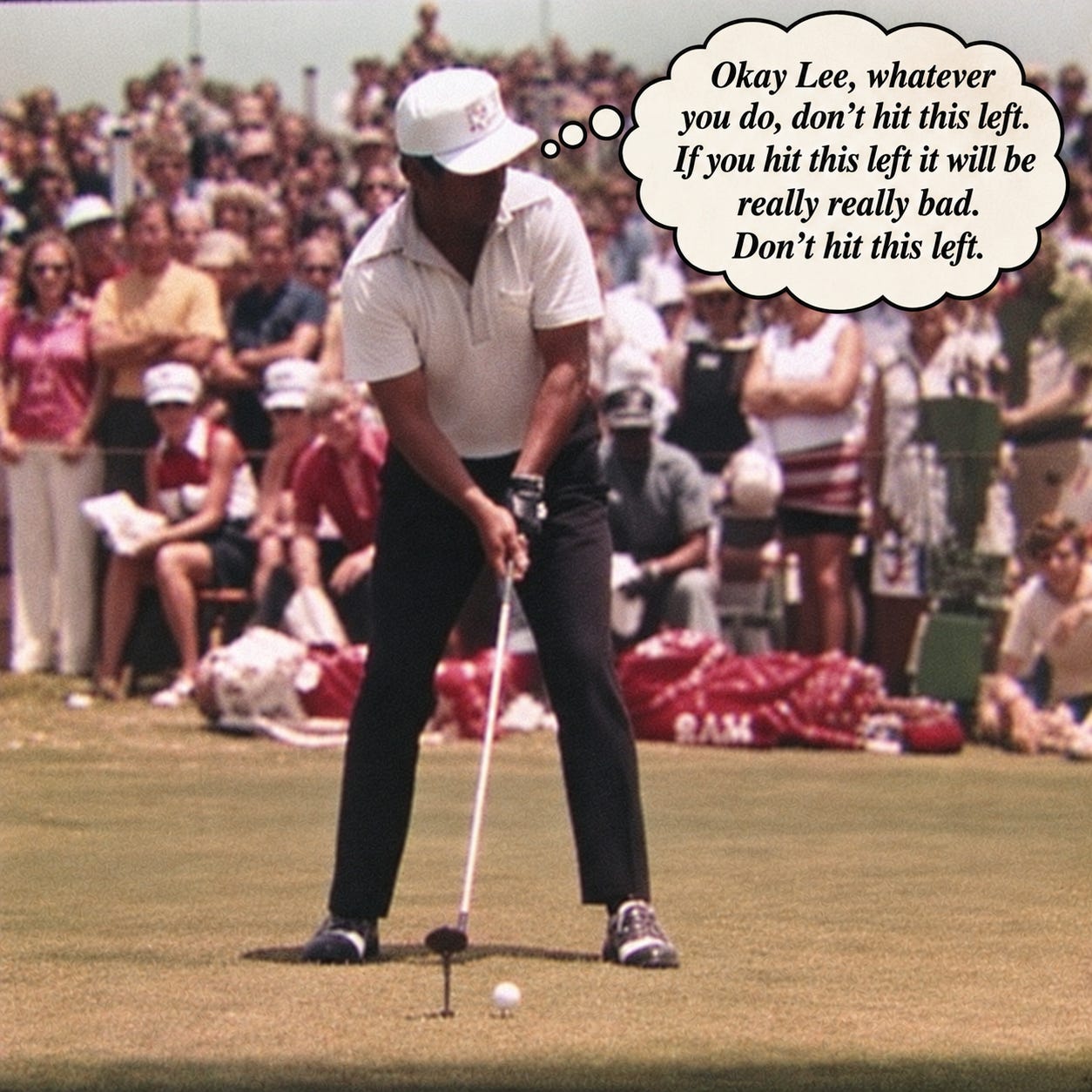
Hazards in golf present two distinct problems — one psychological, and one strategic:
The Psychological Problem: what happens to your mind and your body because of the risk sitting in front of you.
The Strategic Problem: what to choose before you swing given the risk sitting in front of you.
Today I want to unpack both of them. We’ll cover how hazards affect you psychologically and strategically, how to keep them from influencing you negatively, and finally, how to properly manage their risk without sacrificing scoring.
Let’s get into it.
