


Welcome, fellow addict.
Imagine for a moment: you’re standing on a par 3, caught between clubs. The 7-iron is too much. The 8-iron leaves you short. So you choke down on the 7, make your swing, and something unexpected happens.
The strike is cleaner. The flight is tighter. The ball holds its line. And the yardage — which you thought you’d lose since you slid your hands down the grip — barely changes.
Most golfers have experienced some version of this, but never really stop to understand it. Instead, they go back to gripping the full club. That’s a mistake in my opinion. What they felt was no accident.
Choking down on the golf club is one of the most underused weapons in the amateur arsenal. But it has been dismissed by many as something you only do when you need less yardage.
That is wrong, and I’m going to explain why it should matter to you.
Club Head Speed or Ball Speed
The logic goes like this: choke down, shorten the club, lose leverage, lose speed, lose yards.
Makes sense right?
But that line of reasoning only optimizes for only one variable — club head speed. It ignores the variable that actually determines how far the ball goes: ball speed.
Ball speed is a function of two things — club head speed, yes, but also how cleanly you strike the center of the face.
The technical term is smash factor. It’s essentially how efficiently you transfer energy from the club to the ball.
Remember that term. I will refer back to it.

Here is the problem with the conventional wisdom.
A mis hit (toe, heel, anywhere off-center) costs about five to ten miles per hour of ball speed. That lost speed becomes lost yards. And in most cases, the yards you lose from a poor strike exceed the yards you'd give up by choking down an inch.
Hopefully you see where I’m going with this.
You are not just trading speed for control. You are trading the illusion of speed for actual distance.
Before we continue:
If you want access to the premium posts, snag 20% off your first year’s subscription below. It costs less than a single box of golf balls — and it’s guaranteed to help you lose fewer of them :)
What the Data Says
TrackMan testing studied six golfers ranging from scratch to a ten handicap. Each tested their normal clubs alongside clubs choked down. The results were very clear.
Every single golfer improved smash factor when choking down.
Mid-irons and wedges lost very little distance in the testing. The 7-iron showed about 2 yards lost on carry, but much tighter dispersion pattern. I would call that a win.

Wedges lost almost nothing at all. Choking down a full two inches on your sand wedge and making a normal swing was basically the same.
Longer clubs are a different matter. The 4-iron lost twelve yards in SkyTrak testing. Longer clubs already produce a lower launch angle, and choking down suppresses it even further, robbing carry.
The logic is this:
Shorter club makes the swing arc easier to control.
Shorter/easier arc produces more centered contact.
More centered contact improves smash factor.
Improved smash factor offsets the marginal loss in club head speed.
Net result: essentially the same distance, significantly tighter dispersion.
Makes you wonder…
The Paradox
Here is the concept that you should take away from this.
Take a golfer hitting a 7-iron with a full grip. If a slight toe strike produces a lower smash factor, and a choked-down swing produces a higher smash factor due to a cleaner strike — the ball speed may actually be higher on the shorter swing.
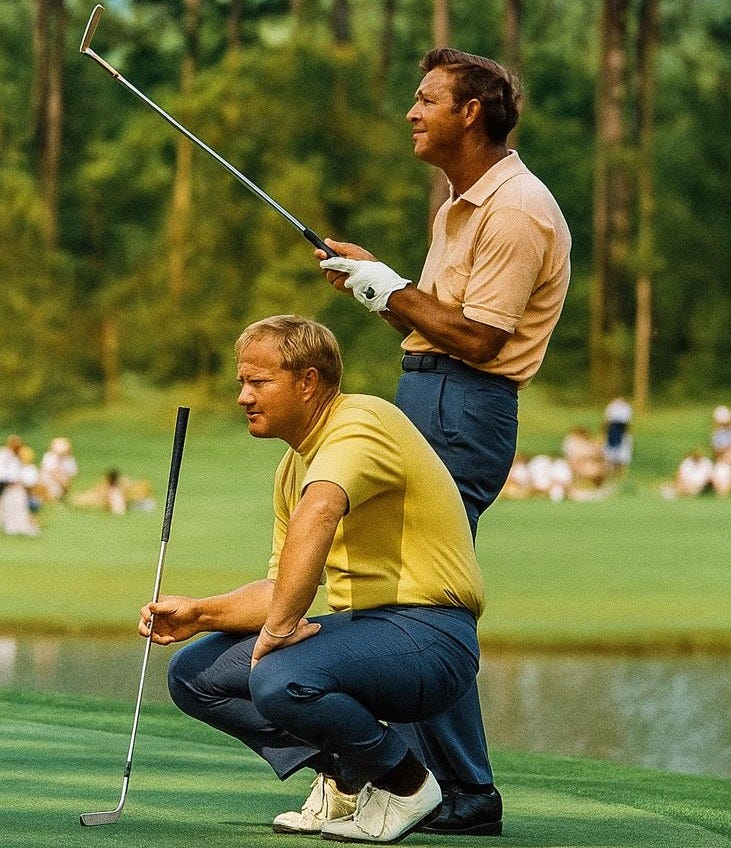
In other words: A centered strike with a slightly shorter lever can outperform a faster swing that misses the sweet spot.
The golfer who chokes down and finds the middle of the face has not compromised his shot. He has improved it.
Most amateur golfers are losing far more distance to mishits than they would ever lose to a shorter grip.
The Mechanics of Choking Down
Three things change when you choke down, and understanding all three may help you understand why you should do it.
