


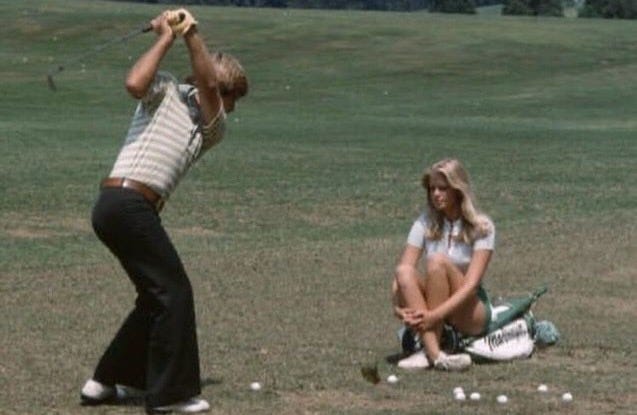
Welcome, you lost soul.
Walk onto any driving range and you’ll see it. Straps, harnesses, weighted contraptions, devices that look like they belong in a physical therapy clinic. Golf has an almost endless supply of training aids promising to fix your swing, your putting, your everything.
Some of them are clever. A few are genuinely useful. Most of them collect dust in your garage next to the ab roller you bought in 2019.
This isn’t about those.
This is about three simple tools that actually tend to move the needle for most golfers. Not because they’re magic. But because they deal with the stuff that actually matters before the club ever moves.
Alignment. Aim. Grip.
Control those, and the game starts making more sense. Ignore them, and no amount of swing changes will save you.
1. The Alignment Stick
If you asked most amateur golfers why they sliced one 40 yards right, they’d immediately start talking about their swing. And maybe the swing is part of it. But a lot of the time they were just aimed 40 yards right to begin with.
Feet aimed down the right side, shoulders open, hips closed, and a swing thrown across the body. The ball going out of bounds isn’t really a mystery. Which is why an alignment stick is, in my opinion, the most important training aid you can own.

Here’s the thing about alignment that throws most people off when they begin to intentionally practice it: standing square to your target doesn’t always feel natural.
Standing over a golf ball, turning your head toward the target, feeling like you’re squared up — it can be really deceptive. Very rarely are amateurs aimed where they think they are.
An alignment stick tells you the truth. That’s it. Put it down, see where you’re actually aimed, and then you can start making sense of your ball flight.
I resisted using one for a long time, honestly. Not because I thought it was pointless — I understood the concept. It just felt wrong. When I set it down properly and tried to stand square behind it, it felt like I was aimed 30 yards right of my target. So I stopped using it and spent years reinforcing a setup that was working against me without me even knowing it.
Only when I committed to using it every single practice session did I actually learn what square felt like. At first it was uncomfortable. It felt closed. It felt like I had to swing way too hard left. But over time, square became normal. And a really significant variable disappeared.
That’s the real value of an alignment stick. Not necessarily comfort. But clarity with your swing/ball flight.
Here are a few options to choose from. Of all the training aids, this one really matters the least when it comes to which one you buy. You can literally use a twig on the ground lol.
I’ve linked a few sellers below:
2. The Putting Mirror
We tend to hear putting talked about as an art form. And there’s definitely truth to that. You need to have great feel to putt well — anyone who’s played for a while knows that. But underneath all of it, it’s pretty simple: is the putter face actually aimed where you think it is?
Because if it’s not, nothing else really matters. Not the read, not the speed, not the stroke. If the face is pointed somewhere different than where you intend, you’re going to miss putts and not really understand why.
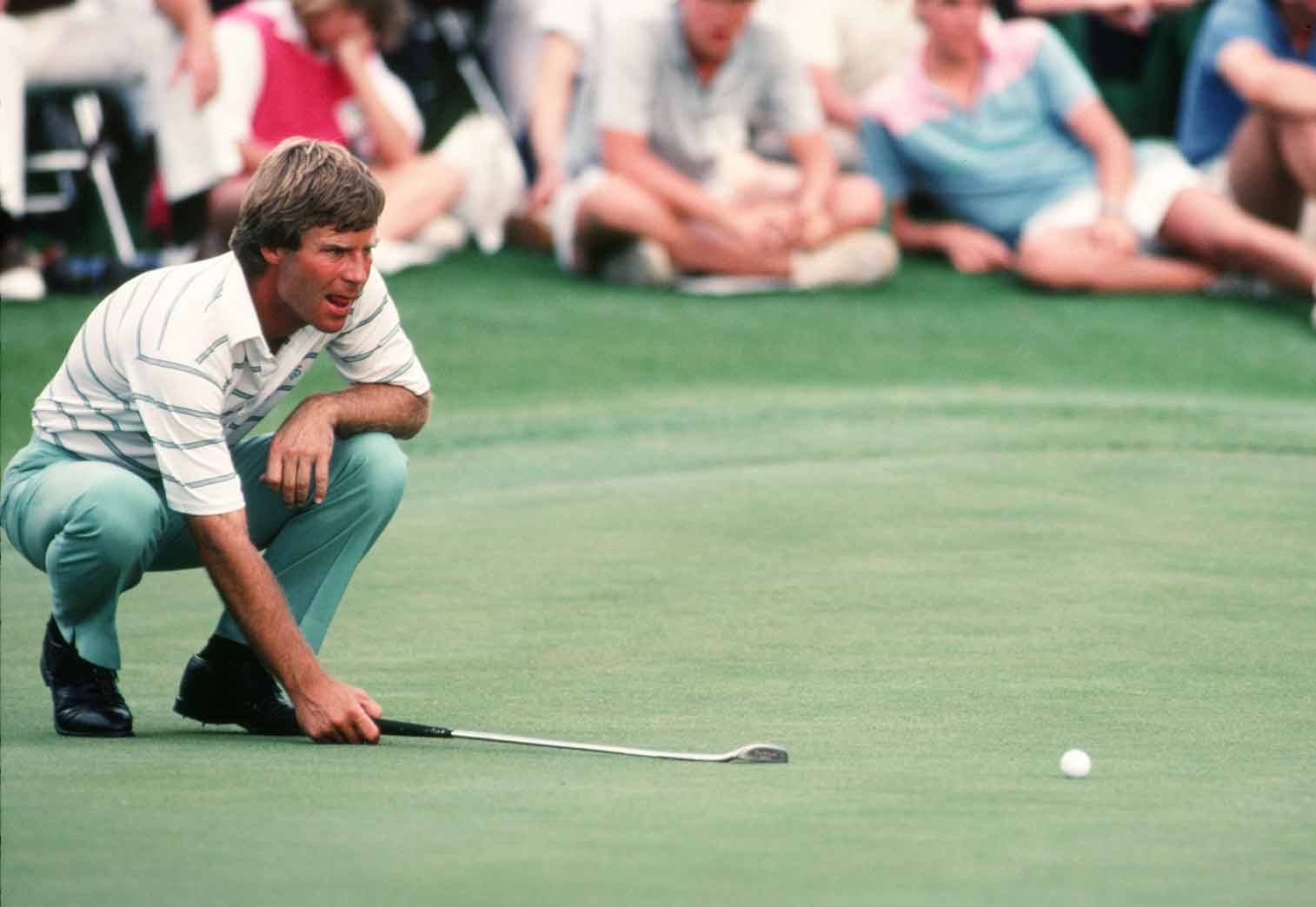
That’s where a putting mirror is really helpful.
The idea is straightforward. Find a straight four or five footer. Place the mirror down with the center line pointing directly at the middle of the hole. Set the ball on it, align the face with that line, and then look at how it feels.
For a lot of golfers, it feels wrong at first. I used to stand pretty open over putts, so when the face was actually square, it felt like I was aimed way right. Good to know.
After enough reps with it, something shifts. You develop a real sense of confidence for where the face is actually aiming, rather than just hoping it all somehow works out when you’re standing over it. In putting, that kind of certainty tends to matter a lot. Doubt is expensive.
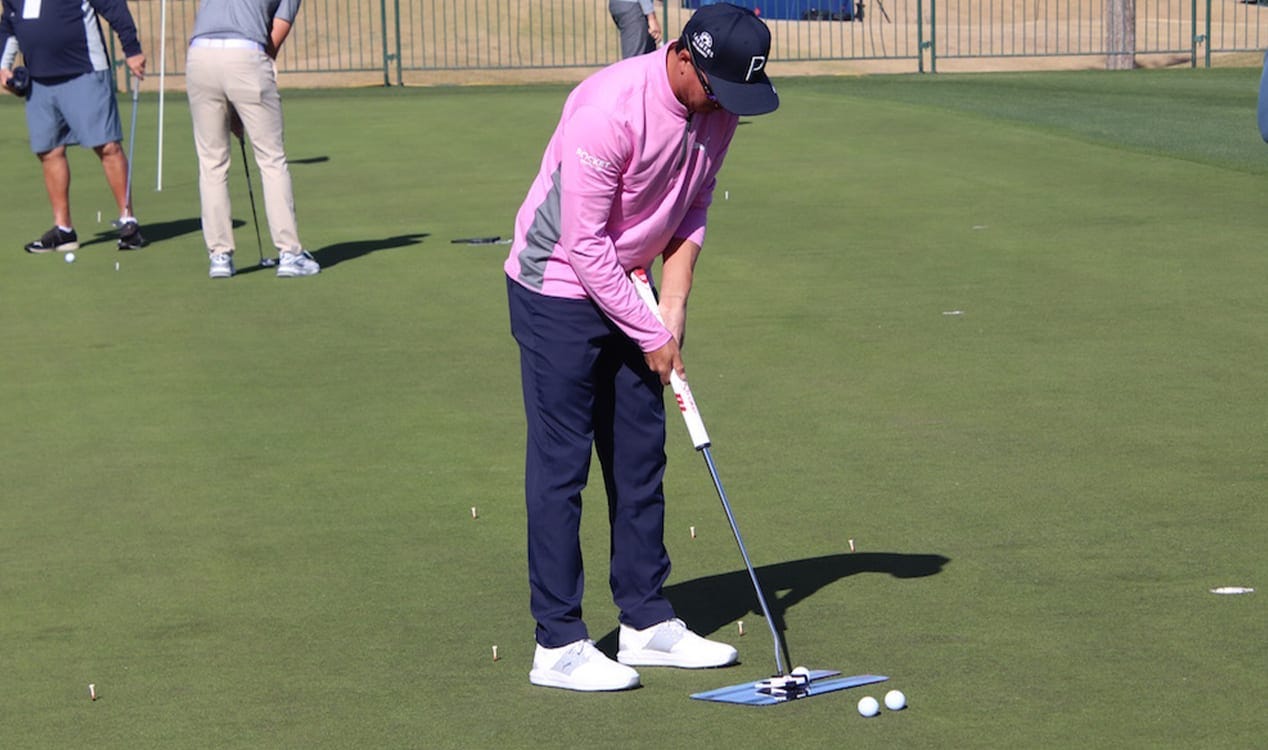
In the above photo, Rickie Fowler is using the larger Eyeline putting mirror which you can get here. They also make a smaller one you can get here.
I prefer the smaller one. But it’s all personal preference.
For more options, I’ve attached a few more links below:
3. The Grip Aid
This one is maybe slightly more optional than the other two, but it addresses something that I think causes a lot of quiet inconsistency in amateur games: grip variation.
Most golfers don’t hold the club exactly the same way twice. And even small differences in grip position change the face angle, which means the same swing can produce pretty different results depending on how you happened to pick up the club that day.
A grip aid — something with molded hand positions or some kind of tactile feedback for proper placement — helps train repeatability.
You might not use it for every practice ball. But spending some time with it before a session tends to build the muscle memory for consistency with your regular clubs.
Even some of the best players in the world use grip training tools. Not because they’ve forgotten how to hold a club, but because they understand how much repeatability matters. If you’re starting from a slightly different position every swing, you’re adding a variable that’s really hard to account for.
You may have seen clips of Scotty Scheffler using one. Every time I’ve watched him warm up I’ve seen him pick it up at some point and play around with it.
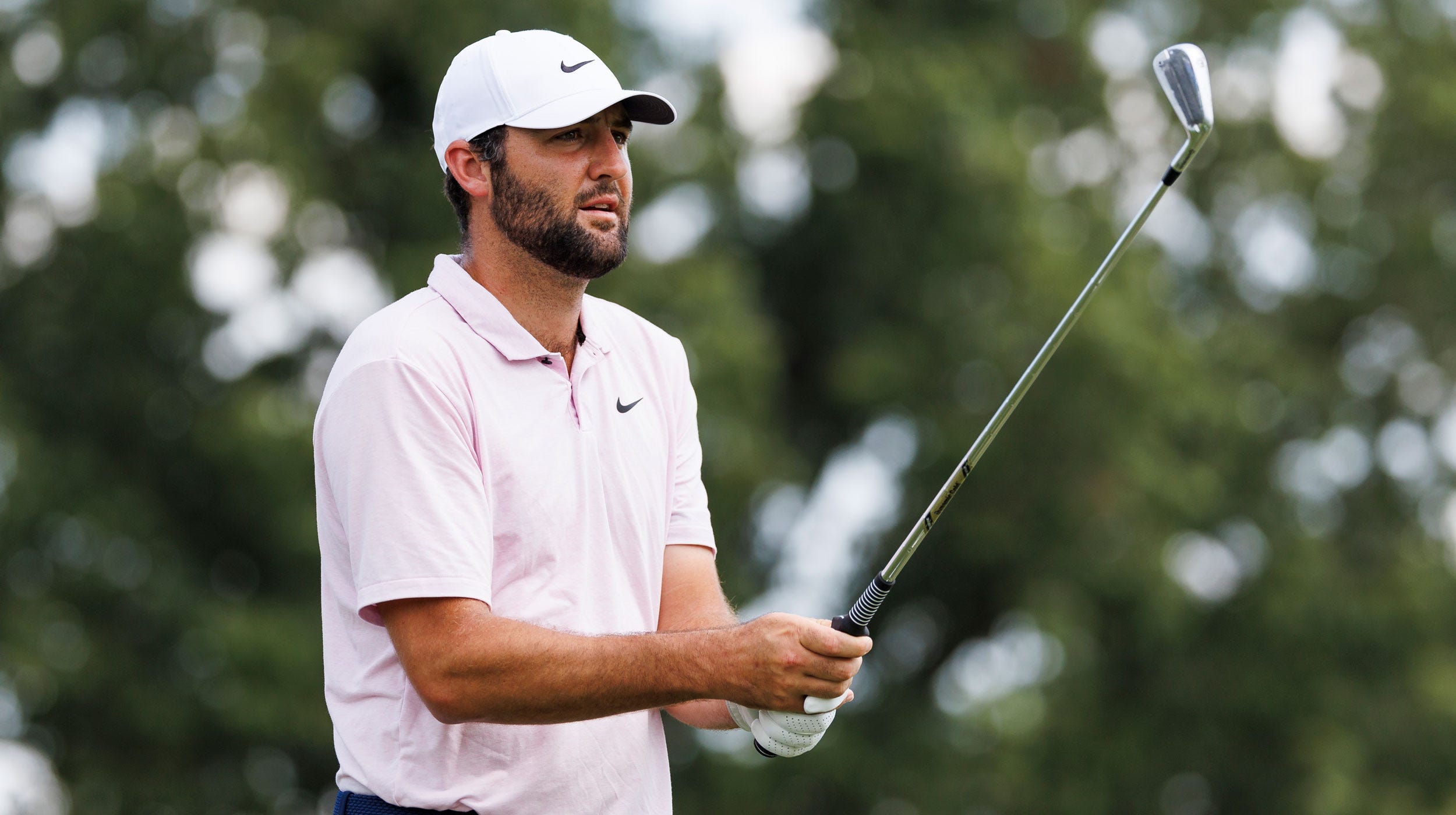
If the number 1 player in the world is still working on his grip, maybe you should too.
If you want to buy the exact same one he is using in these pictures you can buy it here.
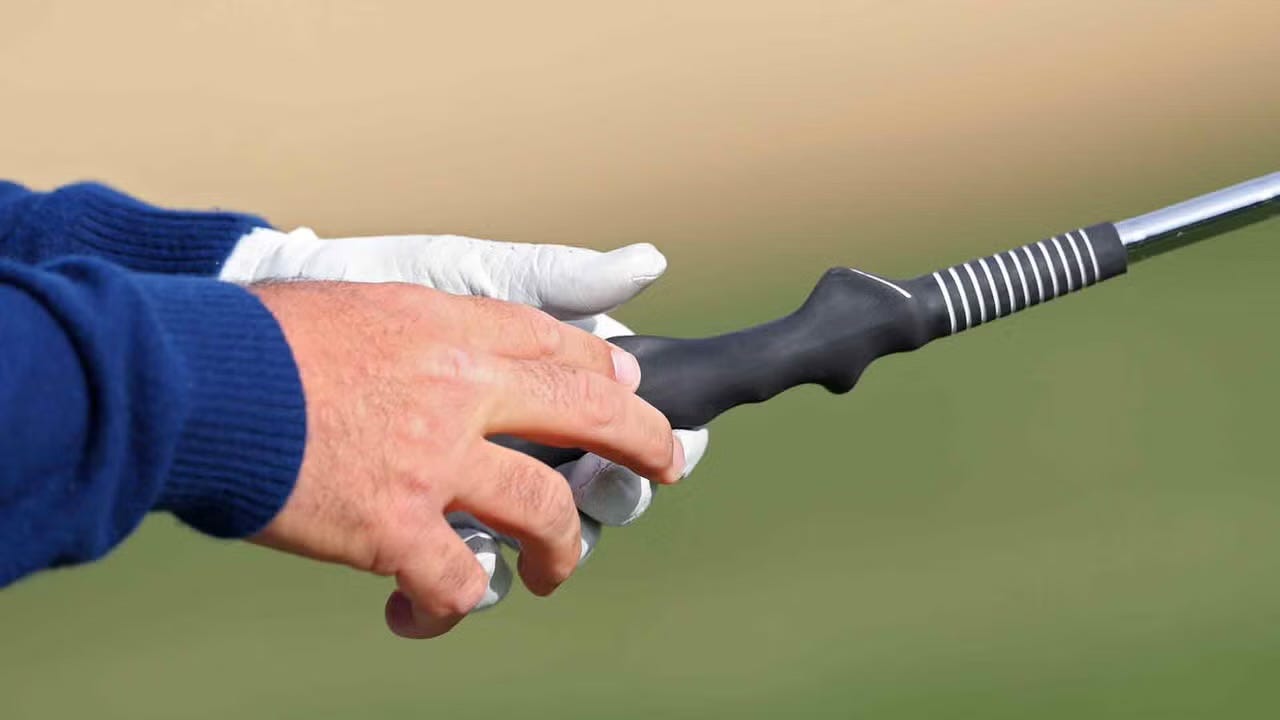
Alignment, aim, grip. Those three things set the table for everything else. Get them consistent and the swing has a real chance to repeat.
For more options, I’ve attached a couple more links below:
The Mental Side of All This
There’s one more benefit to all of this that I think gets overlooked.
Every golfer knows the feeling of standing over a ball and wondering: wait, am I even aimed right? That one thought can snowball pretty quickly. You tighten up. You start steering. You don’t commit fully. Whatever it is.
But when you’ve actually done the work on alignment, aim, and grip — when those things feel trustworthy — your mind gets quieter. You’re not solving geometry over the ball. You’re just swinging. And in golf, that mental freedom is genuinely worth a lot.
The Takeaway
Golf improvement doesn’t need to require a lot of complexity. It usually just needs more simplicity.
Before chasing swing theories or buying whatever training aid is trending on social media, it’s probably worth locking down the three tools that just remove variables: an alignment stick, a putting mirror, and a grip aid.
They’re not exciting. They’re not going to show up in anyone’s highlight reel lol. But they deal with the parts of the game that matter most before you ever take the club back. And if you spend some real quality time using them, you’ll be shocked at how quickly you improve.
Until next time,
Tommy
Social Media: Make sure to follow me on X here.
If you haven’t read them yet, check out some of the most popular Scoring Letter posts below:


Great advice. Free your mind and the swing will follow.
My grip aid is OCD