

The Highest ROI for Your Practice Time
Which Skill Will Save You the Most Strokes?

Practice time is finite. The list of things to work on in golf is not.
How the hell are you supposed to know which skills are worth spending time on?
Two hours practicing in a green-side bunker — two rounds later, you haven’t seen sand once. The flop shot you perfected on Tuesday evening — never needed it. The bump and run you ignored during your chipping session — the only play available all weekend.
Chances are you’re not a touring pro, and you have a regular life outside of golf. The range is not your office, and 9 to 5 on a practice facility is not an option. Your issue isn’t effort or commitment. It’s how should you allocate the practice time that you do have?
Most amateurs practice by feel and by memory. They practice the bunker shot because they struggled to get out of one last Saturday. Or they practice hitting a draw with their 6-iron because their home course sometimes has a pin location that demands it.
Practicing bunker shots and draws is not wrong. The question is whether those are the highest return-on-investment skills for your limited practice time.
For those of you who follow me on X, you may have seen I posted this very question to my followers. The post has close to 200 replies and there’s some great info in some of those comments for anyone who wants to check it out.

The scorecard is the only honest judge. If the goal is a lower number, practice should reflect that. So I decided to do the research, and the question I asked was this:
What does the data actually say about where practice time returns the highest ROI on your score?
The Highest ROI Skill
Ask most any golfer where he’s losing strokes. If he has some level of self-awareness, he’ll probably tell you it’s somewhere in the short game. And I’ll be honest — before I started this research project, I assumed short-game was the answer. No question.
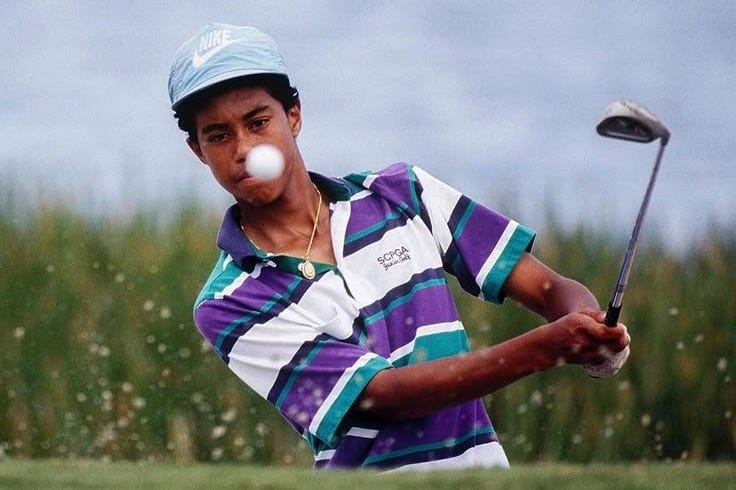
It kind of makes intuitive sense. The short game is the last thing that happens on every hole. It lives in your memory. You bogeyed 18 because you missed the 6-footer or chunked your chip. So obviously if you were a better short game player, you wouldn’t have bogeyed it. Obviously.
But it turns out the real problem starts before you get to the green.
Mark Broadie (the Columbia professor who created strokes-gained) analyzed thousands of amateur rounds and explicitly stated:
“About two-thirds of a 10-stroke difference comes from shots outside of 100 yards… that’s pretty robust across hugely different skill levels.”
He breaks it down further:
Driving ≈ 28%
Approach shots ≈ 39%
Short game ≈ 19%
Putting ≈ 14%
AKA: Your approach shots are costing you strokes
In addition, the massive amateur datasets from Arccos and Shot Scope reveal a similar finding. The mid to long game (shots between 100-200 yards) account for the highest percent of scoring differences between players.
This is also known as Greens in Regulation, and it has the steepest drop-off of any stat:
Scratch: 61% GIR
15 hcp: 24%
25 hcp: 10%
The Strokes Gained Framework
It would help to give a short explanation on what the strokes gained system is before we move on. Essentially it breaks the game into four categories: off the tee, approach play, around the green, and putting. Each shot is evaluated against the expected result from that distance, which allows analysts to determine precisely where strokes are gained and lost across an entire round.
The findings are pretty clear. Long game — tee shots and approaches combined — accounts for roughly 65 to 67 percent of scoring differences between players. Short game accounts for 18 to 20 percent. Putting accounts for 15 percent.
The biggest separator between players is not the short game. It’s in ball-striking quality — which shows up the most in approach shots.
