


Happy Thursday everyone. Thursdays are one of my favorite days of the week during golf season for pretty obvious reasons.
This week the PGA Tour heads to Phoenix for The Waste Management Phoenix Open at TPC Scottsdale. And while everyone and their mother will be watching the chaos on the par 3 16th, I think there’s actually something more useful you could be paying attention to—how the pros manage desert golf courses.
For those living in certain parts of the country, playing desert golf might only happen once or twice in a lifetime. Maybe it’s a winter trip to Arizona or Vegas. Maybe it’s a buddy’s bachelor party. Either way, it’s not something most golfers deal with regularly. And although I want you to enjoy it and have fun out there, desert courses do come with some unique challenges that punish certain mistakes more severely than the parkland courses most of us play week to week.
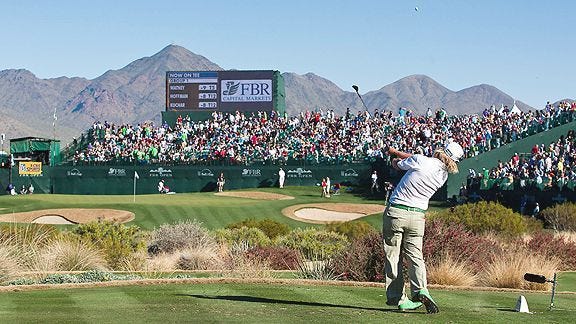
So I figured this was a good time to talk through what actually matters when you’re playing in the desert.
I live in Southern California, so I've had the chance to play desert golf more than a few times. And it really is a unique style of golf that requires some adjustments. Your misses get punished more immediately. The firm conditions change how you need to think about club selection and targets. And if you’re not prepared for those differences, you can have a frustrating round pretty quickly.
So here are some basic course management tips to take with you the next time you get the chance to play desert golf.
Stay on Grass at All Costs
Desert courses trick you with wide visuals. You’ll see what feels like tons of space off the tee, but only a portion of it is actually playable. The rest is just pretty landscape filled with sand and rocks that will turn your hole ugly real fast.
The guys who score well in the desert are extremely accurate off the tee. They’re staying on grass. They’re picking targets that prioritize safe landing areas, even if it means giving up some distance.

For most of us, this means being willing to hit less club when driver brings trouble into play. If your miss pattern is a push or pull and there’s desert on that side, less club is probably smarter.
Know Your Carry Numbers (Not Just Total Distance)
Desert courses often have forced carries over waste areas. And this is where not knowing your carry distance becomes very very expensive.
Most golfers think about clubs in terms of total distance. “My 7-iron goes 165.” Ok, but how far does it carry? Because if there’s desert 155 yards out and your carry is only 150, that total distance number doesn’t help you.
It’s worth figuring out your realistic carry yardage for each club. Not your perfect strike number. Your normal carry when you make decent contact. Because when you’re standing over a forced carry zone, a topped drive is going to cost you a hell of a lot more than your normal course at home. You’re not going to be punch out with your ball wedged between a cactus and a boulder lol.
Choosing a club you know you can hit well and carry the hazard is almost always smarter than hoping you catch your driver flush.
On tees with desert pinch points, plan backward. Don’t ask “what gets me farthest?” Ask “what guarantees grass?”
Expect More Roll (And Club Down Accordingly)
Firm fairways and dry air mean way more rollout than you’re used to. This is where “bombing and praying” completely falls apart.
You hit it far, and then it runs. And runs. Straight into trouble you didn’t account for.
If the fairway is running firm, club down off the tee for control. You’re trading distance for precision. And when the bounce is doing half the traveling, precision usually matters more than power.
Altitude and Dry Air Change Your Numbers
A lot of desert courses play at elevation. Combined with dry air, the ball often flies farther and releases more than you expect.
Be willing to take one less club, especially into greens. Confirm it with actual ball flight, not assumption. If you’re between clubs on a firm course, lean toward the shot that lands shorter and releases. The miss that flies long and runs off the back is usually a lot harder to recover from than landing short with an uphill chip.
Desert Wind is Sneaky
Desert wind rarely stays steady. It swirls and changes direction, making your “perfect” club selection questionable fast.
Theres not much here I can tell you other than to just be aware of it. If you have a lower punch shot, you can play that when the wind picks up. You’ll also get that extra rollout from the firm fairways, which can make this shot even more effective.

If you’re teeing off with a forced carry over desert, please be aware of wind direction. If it’s coming back into you, that is valuable information…
Firm Greens Change Everything
This is probably the biggest adjustment. Desert greens run firm and fast, which means bigger first bounce and more release.
Stop firing at every flag. If that pin is tucked and you miss by a little, you’re in big trouble…
Land approaches short and let them release. You may even be trying to purposefully land your shots short of the green on the fairway. Try to stay below the hole when possible. We don’t want any downhill putts on glassy desert greens.
Tight Desert Lies
On bare, firm ground, your club can bounce into the ball and blade it much more easily.
You need to make sure you’re attack angle is steep enough to compress your irons. Choke down slightly, weight forward, steeper angle of attack. You’re not scooping it. You’re ensuring you hit ball first instead of bouncing into it.
Besides, a nice solid compressed three-quarter swing in the desert will take you much further than a wild full swing that gets up into the swirly desert air.
Lower Shots Work Better Than You Think
Desert golf gives you firm turf and predictable release. Use it.
Bump-and-runs reduce your need for perfect contact and spin. The ball travels on the ground where conditions are most consistent. Around firm greens, a rolling ball is often easier to control than one that’s flying.
Flop shots look cooler. Lower scores are better.
Don’t Get Baited Into Hero Shots
Desert trouble often seems “almost playable” until it isn’t. You can see the green. It’s only 140 yards. I can make this shot easy!

But the lie is terrible. There’s cactus in your backswing. The ball might be on a rock you cant see underneath the sand.
Punch out to grass. Accept the bogey. Avoid the double.
Hydrate Like It Affects Your Score (Because It Does)
Heat drains decision-making and focus. You don’t just get physically tired—your choices get sloppy.
I’ve played desert golf in 100+ degrees, and it isn’t fun… You stop caring about the fundamentals. Your brain loses the capacity to care about anything other than water lol.
Drink water consistently. Maybe bring electrolytes if you’re walking. Stupid mental mistakes in the desert can just be dehydration in disguise.
Desert-Specific Practice Worth Prioritizing
Here’s a few simple practice tips before playing desert golf.
Carry control: On the range, pick a target and create a mental “carry gate.” Choose a club and minimum carry number. Count only shots that would clear desert and finish on your line.
Tight-lie chipping: Find the firmest practice lie you can. Practice landing on a small spot and letting it release. Build a reliable chip shot with lower launch and consistent rollout.
Speed control putting: Your best desert putting skill isn’t reading. It’s pace. Ladder drill—roll putts to finish 2–3 feet past the hole. Prioritize downhill pace control.

Final Thought
Desert golf punishes different mistakes than parkland golf. Stay on grass. Know your carries. Use rollout intelligently. Respect firm greens. Avoid hero shots. Hydrate.
I personally think the desert is beautiful. So I’ll be jealous if you get to play any cool desert courses. And if you do, send in some photos or post round thought! I would love to see if any of these tips helped!
Until next time,
Tommy