


There is a long list of things in this game that will test your sanity. Three-putts from twenty feet. A chunked wedge after the best drive of your round. Tee boxes so uneven they belong on a ski slope. The list is long, and it is personal.
But slow play is different. Slow play is a special kind of torture.
There is something uniquely maddening about watching a man stand motionless behind his ball — no urgency, no awareness, no apparent understanding that the green ahead has been open for five minutes. It’s not just an inconvenience. It’s an affront!
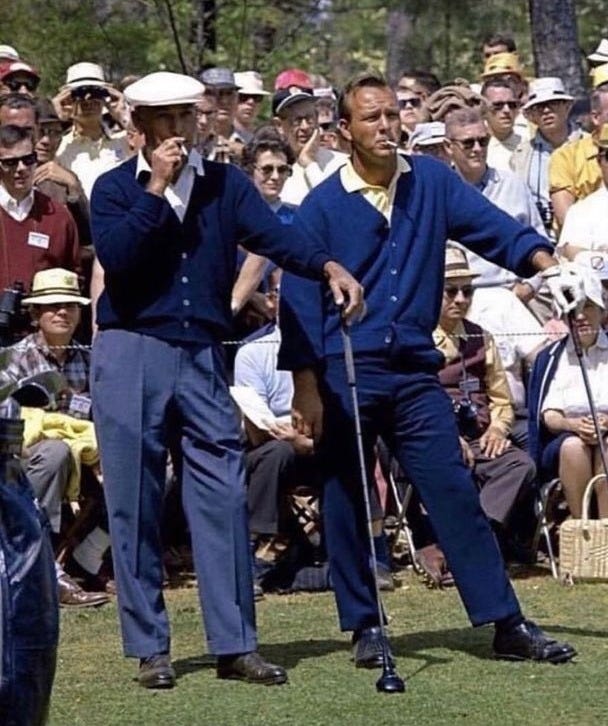
If you’ve played this game more than a hand-full of times, you already know this. You know how long a pre-shot routine should take. You know the difference between reading a putt and performing a one-man theatrical production over it. The etiquette is not complicated.
And yet, here we are.
The slow golfer is not a new phenomenon. He has roamed the earth long before us, and will continue to long after we are gone. He is a permanent fixture of the game. No amount of frustration, whistles from the tee-box, or pointed throat-clearing has ever cured him.
Which leaves us with one viable option:
Learn to deal with slow play, and not let it affect your performance.
Does Slow Play Actually Cost You Strokes?
Ok, so you might be reading this and thinking: “Sure, slow play is annoying and makes me want to die. But does it actually make you worse?”
Fair question. Here is your answer.
