


You’re on the first tee. You take two practice swings. Then a third. You check your grip, look down the fairway, then you step in. No actually let’s step back off it for one more practice swing. This one feels a little better. Your heart rate is up slightly. Nothing dramatic, but it’s there.
Your brain is running its usual pre-shot loop: Don’t rush from the top. Smooth tempo. Swing hard. Swing soft. Just put it in play. You step in again. You swing. You heel a weak little cut down the right side into the rough. Playable, but nothing to feel good about…
Then the single walker who joined your group steps in.
He gives it one short practice swing. Sets up to the ball. A quick glance down the fairway. Pulls the trigger.
The ball comes off his club face like a controlled, unhurried bullet. He’s already grabbed his tee before the ball lands.
No reaction. No commentary. He grabs his bag and walks down the fairway.
Congrats. You’ve just been frame mogged.
I want you all to read the premium content because I truly believe that’s where a lot of the game-changing and actionable info lives, while also still making it worth my time to produce.
That being said, I’ve decided to run a little promo offering 30% of annual subscriptions. That’s a full year of ideas for half the price of a box of ProV1s lol.
You can access it HERE
What is Frame Mogging?
There’s a new viral meme making the rounds on the internet right now called frame mogging. If you’re over 25, or have a life, there’s a great chance you’ve never heard of it (I’m not sure what that says about me). I won’t get into where it came from, because the origin is about as juvenile as you’d expect. But the concept itself I find pretty amusing.
According to Grok, frame mogging is essentially this:
When one person visibly dominates or outclasses another purely based on their physical frame — basically their overall skeletal structure, shoulder width, clavicle length, V-taper, back development, muscular build, and general imposing upper-body presence.
- When guy A stands next to guy B and makes B look narrow, small, frail, or less dominant by comparison → guy A is frame mogging guy B (or guy B just got brutally frame mogged).
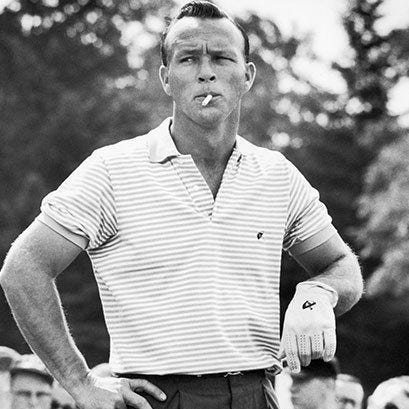
But the term is shifting away from purely physical, and has drifted into the realm of mental. Meaning that frame mogging can be displayed through an aura of charisma or confidence.
So I heard your calls. I read your emails. I know how important this topic is for my readers. Everyone has been asking “Tommy! When will we get an article on frame-mogging in golf!?”
Jk. That did not happen. But nonetheless, here are some ways you can brutally frame mog others on the golf course—Scoring Letter style.
Step In and Hit It
Most golfers spend way too long standing over the ball.
The first look is usually just to confirm they’re aimed somewhere reasonable. But then the head starts moving to double-check. The feet shift slightly, so they realign. They look up again. Something feels off. By the time they look back down, they’ve lost track of what they were even aiming at to begin with.
You need to become the golfer who stands behind it, sees your line, steps in, takes one look, and swings. That kind of frame communicates assurance in your process—not just to the people watching, but to yourself.
Multiple looks and rehearsal swings suggest you’re still working something out, or you’re completely uncommitted to whatever swing you’re about to make. Not the look we’re going for if we want to frame mog lesser mortals.
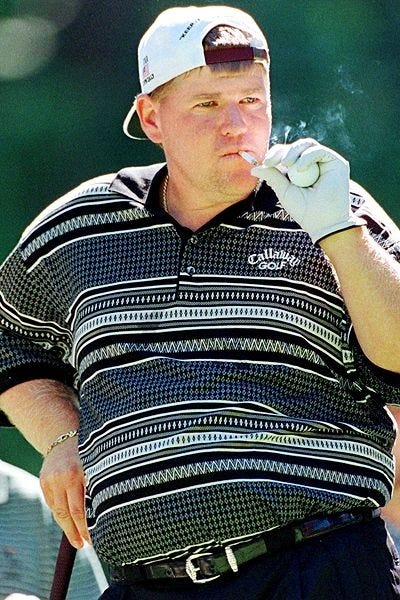
Spending less time rehearsing can also help with rhythm and tempo. The less time you stand over it, the less time you have to build up tension before the real swing happens.
Take one smooth practice swing behind it. Pause to see your line. Then step in and execute. You'll deal with the next shot whatever it is.
Practice this in your next round. Dedicate a few tee shots to just stepping in, taking a look, and swinging. No extra time to think or realign. You’ll be surprised.
Putt Quickly
One of the most visually striking frame mogs you can pull off on the golf course.
By the time you walk back from setting your bag down, you’ve already read the green. The speed, the break, the general shape of it—you picked that up on the way.
You don’t need to pace it off. No AimPoint. No lying down to find some hidden slope.
The putter head dangles loosely below your hands as you walk in from behind. You’re a feel putter. The length of your backstroke isn’t something you’ve pre-decided—you’ll know when you get there.
You’re not really thinking about making the ball go in the hole. You’re thinking about how you’d like it to go in. Off the back? Trickling in from the side? You’ll sort that out while you’re standing over it.
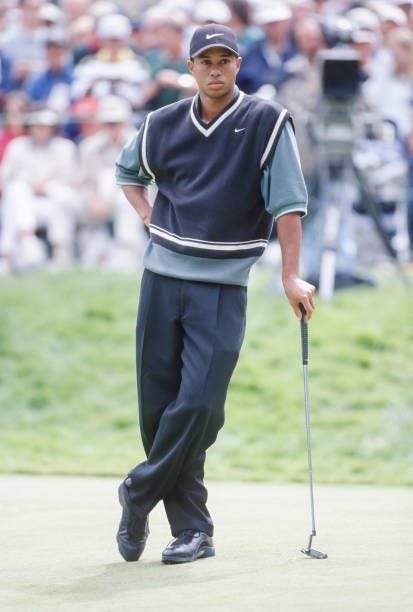
Meanwhile, your playing partner is holding his putter up in the air with one eye closed. He’s been circling the putt for three minutes. He runs through five practice strokes, steps in, and tops it.
The idea here is pretty simple: see the line, step in, roll it.
No extra rehearsal strokes. No recalibrating. Just quiet commitment to what you already read.
Start with putts inside six feet to build the pattern. See it, step in, roll it. I think the repetition of that process tends to build more trust over time than any amount of pre-stroke rehearsal does.
If You Grab The Wrong Club, Use it Anyway
You drop your bag at the halfway point and walk to your ball with just a putter and a 7-iron. You get there and realize the wind has picked up more than you expected. Your playing partner offers to grab the cart so you can go back for another club.
“No, that’s alright. I’ll use this.”
Your playing parter is speechless. The cart girl is smitten. “Is he really that comfortable hitting different shots with the same club!?”
So the wind has picked up a tad, no need to worry. You play it back in your stance a touch, close the face slightly, and hit a low drawing bullet that stays under the wind and run it up onto the green.
And if the wind had shifted the other way—now you’ve got too much club?
No problem. Choke up, play a little trap fade, let the wind carry it in.
It’s not worth the walk back to the bag. And honestly, what’s the worst that happens? You end up in a bunker and have to get up and down? That’s fine too.
I’m not saying purposefully use the wrong club to prove a point. What I’m saying is learn to hit a variety of shots with the same club.
Next time you’re at the range, take your 7-iron out and try to hit 4 different shots with it. Ditch the swing thoughts and just watch the ball flight.
Stop Letting Bad Shots Bother You
You already know bad shots will happen. You’re a human swinging a golf club and its inevitable. But when they happen, you don’t throw a temper tantrum. No visible spiral. No club throwing. No examining your club face trying to pretend you don’t know what happened.
You accept it and move onto the next shot. You’re confident in your game, and that last shot you just thinned was a fluke. It happened, now its forgotten.
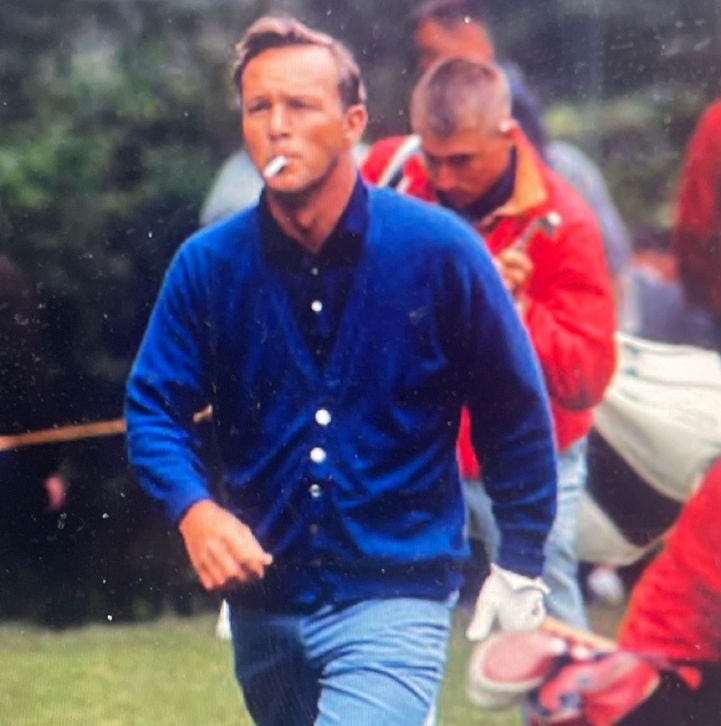
Ball stuck behind a tree? The 15 handicap is attempting to sling a hook around it in order to get back onto the green and salvage the hole. He ends up going OB and cards an 8.
You on the other hand aren’t trying to impress anyone. You’re confident in your wedges. You punch out to a comfortable stock wedge distance, and then stick your next shot 6 feet from the cup.
Besides, what’s the worst that can happen? You don’t make par and post a bogey instead? The next hole is a par 5 and you know you’ll birdie it. It’s not worth crying over an unlucky shot that happened to nestle its way behind a tree.
Control the frame, control your mood, control your game. Good scores will follow.
Under-react to Everything
Birdie—small nod. Bogey—same response.
In order to frame mog, you must play the long narrative. Others ride the emotional wave of each hole. The flatlined version is harder to read and harder to rattle.
It’s not about suppressing genuine feeling. It’s more about not letting one moment set the emotional tone for the next one.
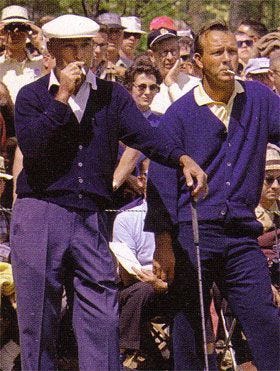
In golf, the next shot is the most important shot of your life. It requires your undivided attention, and any thoughts still lingering from the previous birdie or bogey only serve to distract you.
Sports psychology often emphasizes: process focus, emotional regulation, automatic execution. The overlap between “looking calm” and “playing well” is not a coincidence.
Frame mogging isn’t fake confidence. It’s more like what happens when preparation meets trust—when you’ve done the work, and you let yourself do it.
Final Takeaway
None of this is an excuse to show up to the course with an inflated sense of yourself. That tends to wear thin pretty fast. Don’t be that guy.
At its core, frame mogging on the golf course is just about being at ease—unaffected by the bad shots, unbothered by what’s happening around you, and light enough that the people you’re playing with are glad you’re there.
So take less time on your shots, keep a level head at all times, and just go hit the next shot with confidence.
Until next time,
Tommy
PDF Guides: Are available by clicking here for paid subs
Social Media: Make sure to follow me on X here.
In my roughly 50 years of golf, there has been times I've been better at this than others. I honestly think, for me at least, it comes down to short game. I was more cavalier when I knew I could make anything inside of 8-10 feet, and had a good chance over that. It just makes the game "way" easier.