



Oh, swing thoughts. They’re an amazing thing. A quiet little voice in your head that somehow holds the power to influence your entire game. They’re personal in a way almost nothing else in golf is. I’ve carried some of the same ones for years. How would I operate without them? They’re my friends (Yes, I hear voices).
But how many swing thoughts is too many? Keep the left arm straight. Clear the lead hip. Maintain the triangle. Hold the lag. Release the lag. Hinge the wrists. Don’t hinge the wrists.
Golf’s not hard right?
In this week’s Scoring Letter, I wanted to see whether top players and coaches agree on how many swing thoughts you should allow in your head at one time.
We’ll also look at a couple of related studies to help us better understand the mind as it pertains to the golf swing.
Let’s get into it.

Are Swing Thoughts a Good Thing?
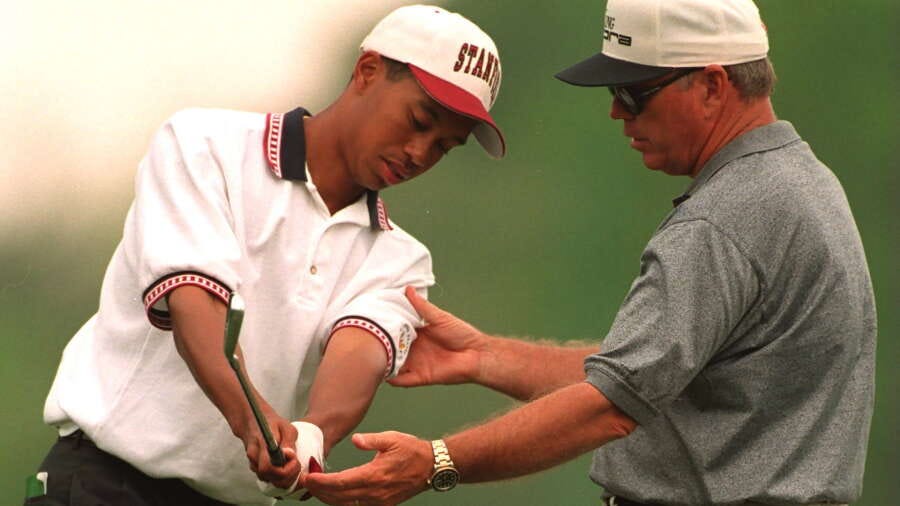
Let’s start here: generally speaking, swing thoughts are a good thing — provided they actually help you play better. Most coaches and players support using them, not necessarily because they’re inherently “good”, but because they know they’re largely unavoidable. Since you can't escape them, you might as well make them count. As legendary golf coach Butch Harmon notes, the goal is to find the one thought that organizes everything.
In a 2007 study, Simon Jenkins looked at 113 players who played on the European Tour and found that each one of them reported having a swing thought for their full swing. In the study they refer to them at swing keys.
They also found that when a golfer is playing well, he reports having fewer swing thoughts. That sounds obvious at first, but it raises a chicken-and-egg question: Does playing well reduce the need to overthink, or does clearing your head lead to playing well?
Either way, coaches agree that there is a limit to how many swing thoughts a player can successfully hold. The question is how many?
