


The Flyer
How many of you truly understand what a “flyer” lie is?
If you don’t know it by name, you’ve certainly experienced it. You walk up to your golf ball after an errant drive and there it is — sitting up in the rough like it was gently placed there. The Golf Gods, for once, taking mercy! A teed-up lie where you were expecting punishment. So you pull out your 7-iron, deliver clean confident contact, and the ball flies off the back of the green and continues rolling another 20 yards. You walk away with a bogey.
What the hell just happened?
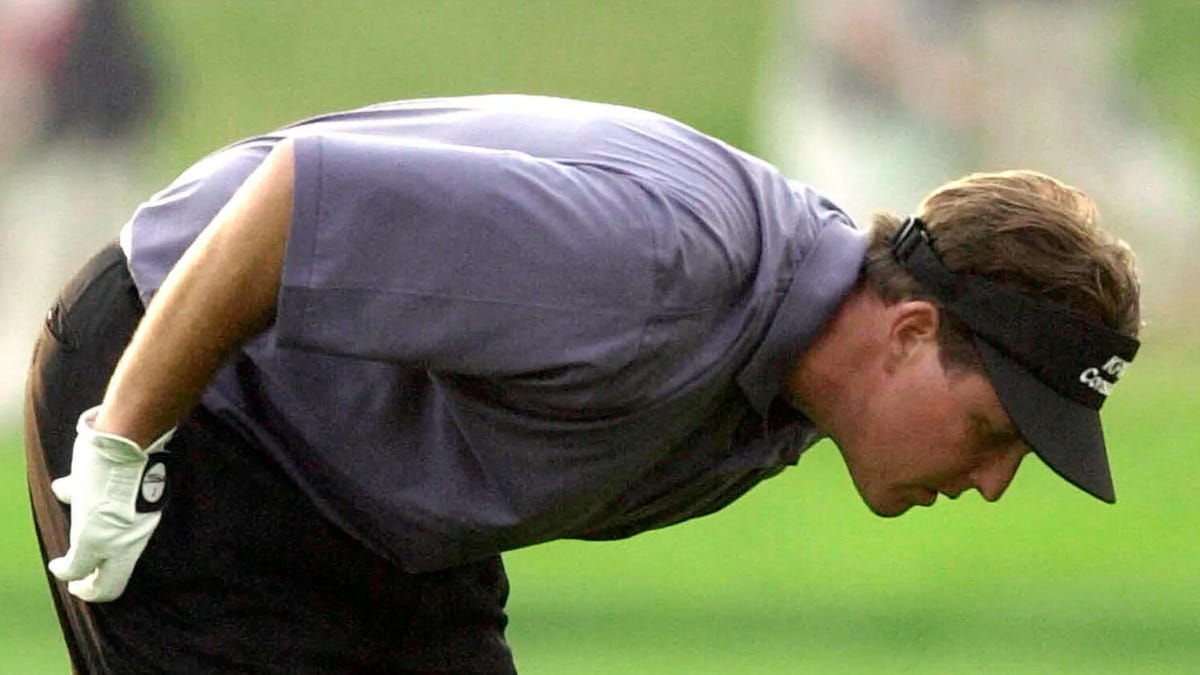
I’ll be the first to admit I had never really stopped to understand what made a flyer lie different from other lies. I used to think it was just a cooler way of describing a ball sitting in the rough. I heard it said on TV one time and just started parroting it. I probably used the term incorrectly dozens of times. So to anyone who golfed with me before 2023, thanks for politely ignoring my ignorance.
Well, I am here to tell you that I am a changed man, and a flyer is indeed NOT just a ball sitting in the rough. There is actually much more to it.
Let’s first define what a flyer is:
A flyer is a shot from light to moderate rough where grass gets trapped between the club face and ball at impact, killing spin while preserving ball speed, causing the ball to fly farther than expected with minimal stopping power.
The flyer is unique because it’s the only shot where gaining distance is a bad thing. No one wants to gain distance if it means sacrificing control and predictability.
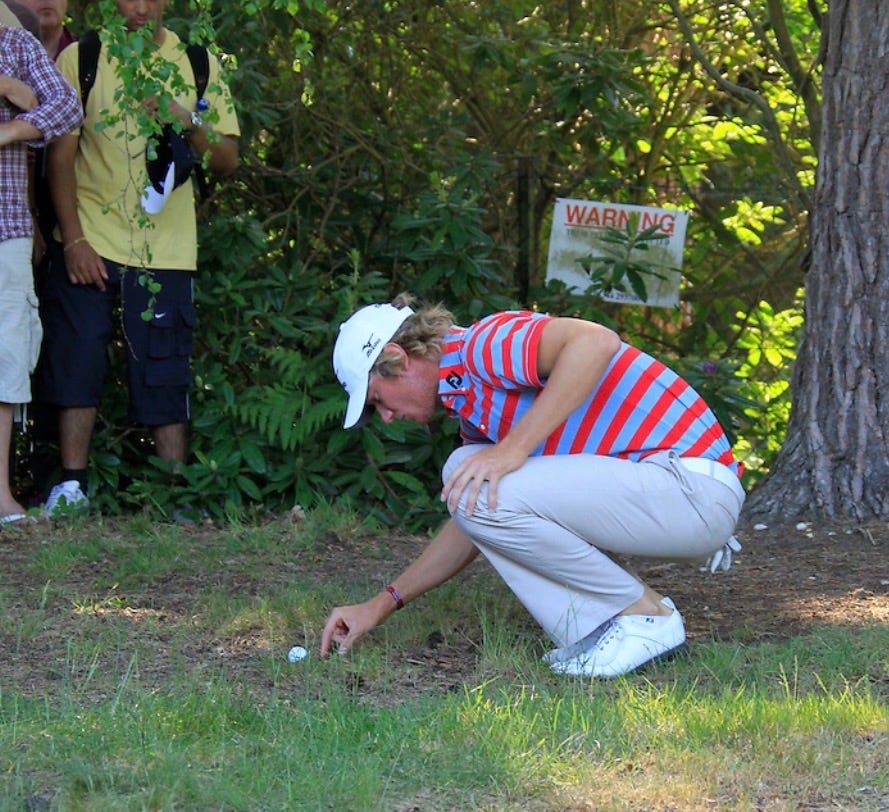
Where amateurs get into trouble is lie assessment. Pros build entire pre-shot routines around reading flyers. Amateurs barely glance at the grass behind their ball.
This post will change that.
We'll work through identifying them, the variables that matter, the physics, the technique, and ultimately some strategy. By the end you'll know more about flyer lies than 95% of the people you play with. That doesn't mean you'll successfully execute them — I can't help with that unfortunately... But you'll at least be making a sound decision before swinging rather than guessing.
The Physics
I know I gave a definition in the intro, but let’s review in more detail exactly what makes a flyer, a flyer.
Grass (and sometimes moisture) gets trapped between the club face and the ball at impact. The grooves can’t catch the ball, and you lose the normal friction. The ball slides up the face instead of compressing against it.
You hear many pros and instructors describe the ball coming off the club face like a knuckleball.
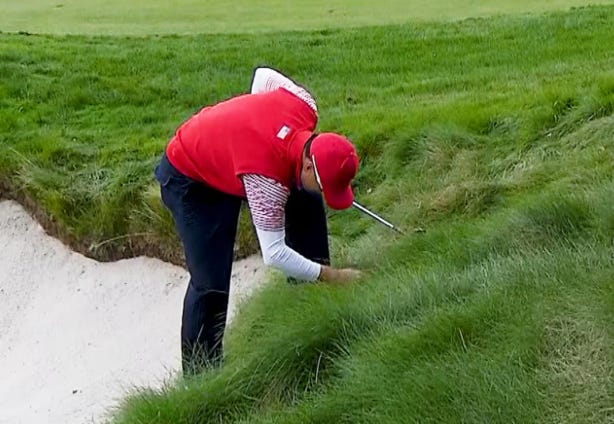
Andrew Rice, a Golf Digest’s top instructor, explains it like this:
“As this grass/matter fills the grooves at impact and gets trapped between the ball and the face, there is very little grip on the ball, and as a result the ball launches closer to the dynamic/delivered loft (higher) and spins very little. High launch, low spin — that’s what we’re looking for with our driver, but not with an 8-iron from 130 yards.”
You’re ultimately hitting a shot that takes off with the spin profile of a driver and the loft of a 7-iron. Knuckleballish in the air. Hot when it lands. Very difficult to hold the green.
How To Spot One
Set your club behind the ball and look at what’s between the face and the ball. If you see any grass there (blades of grass where the face would make contact) you have a flyer candidate. Candidate being the key word.
Not every candidate (ball in the rough) is a flyer. There’s a Goldilocks principle to it. Too little grass between the face and ball, and it’s not going to come out a flyer. Too much, and the grass slows the club before it even reaches the ball. Not a flyer, just a deadened shot. The flyer lives in the very narrow middle. Just enough grass to reduce friction. Not enough to kill your club head speed.
Here is a great visual for you:
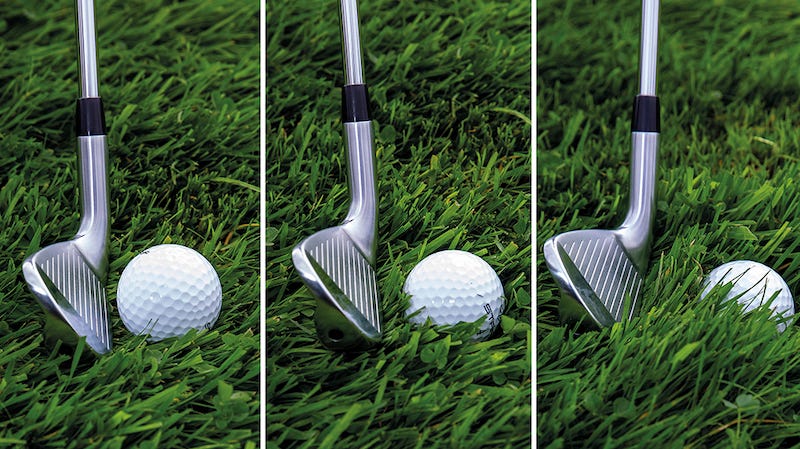
This photo is obviously a little too perfect. But you get the idea. Notice how in the middle picture (the flyer lie) there is just enough grass to obstruct the friction of the grooves but not enough to slow down club head speed. This is the Goldilocks zone.
A Few Pre-shot routines
- Look behind the ball, not at it. Two or three inches behind is where the club actually contacts the grass first. This is the area you need to assess. It does you no good to just stand above and look down at the ball.
- Grain direction. Grass leaning toward your target (down-grain) amplifies the flyer. Grass growing toward you (into-grain) reduces it by reducing club head speed.
- Moisture. Light dampness (morning dew) or light drizzle makes flyers worse. Heavy, saturated rough does the opposite.
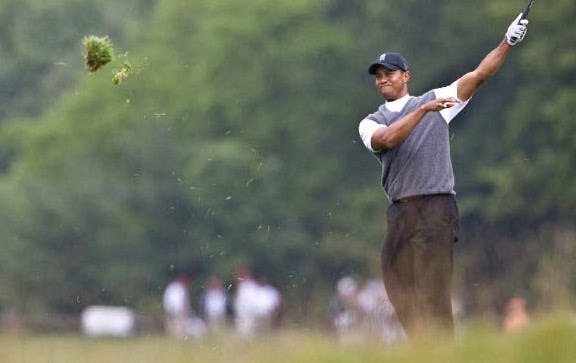
The bottom line: a ball sitting on top of the grass with grass behind it is a flyer lie. A ball that’s a little more sunken into the grass is a different problem entirely. The visual difference can sometimes be subtle. The outcome unfortunately is not.
How To Play The Shot (There is Disagreement)
There isn’t much disagreement on how to identify or assess a flyer lie. But when it comes to actually playing one — ball position, club face, swing speed, club selection — the advice can get messy pretty quickly.
Let’s go through all of it and you can decide what suits your game.
